The Double-Strength Method: Why Your Homemade Iced Coffee Has Always Been Watery
Every time someone tells me their homemade iced coffee tastes watery and weak, the answer is always the same: they brewed at standard strength. Here’s the physics of the problem — a full cup of ice is about 60% air space and 40% actual ice. As that ice melts from contact with hot or warm coffee, it adds 2–4 oz of water to your drink in the first few minutes alone. If you start with standard-strength coffee, you end up with 60–70% strength coffee — pale, flat, and disappointing. The double-strength method is the entire solution. Let me walk you through it step by step.
Ingredients List
- 2 tablespoons ground coffee (medium-coarse grind, fresh if possible)
- 6 oz hot water (195–205°F)
- 1 cup of ice (fill the glass generously)
- 2–4 oz milk of choice (oat, almond, whole, or cream)
- Sweetener: simple syrup preferred (1 part sugar, 1 part water, simmered)
- Optional: ½ tsp vanilla extract, cinnamon, or flavored syrup
Equipment you’ll need: Kettle or thermometer, brewing method of choice (pour-over, French press, drip machine, or espresso machine), tall glass, long spoon.
Timing
- Prep: 2 minutes
- Brew: 3–5 minutes
- Cool: 5 minutes
- Assemble: 1 minute
- Total: 11–13 minutes
Step 1 — Grind Your Coffee at the Right Coarseness
If you’re grinding your own beans (highly recommended for best flavor), aim for a medium-coarse grind — similar to rough sea salt in texture. Too fine: over-extracts, producing bitterness. Too coarse: under-extracts, producing weak, sour coffee. Pre-ground coffee is fine but buy the freshest bag you can — coffee loses 60% of its aromatic volatile compounds within 2 weeks of opening.
Grind amount: 2 tablespoons per 6 oz water. This is exactly twice the standard ratio of 1 tablespoon per 6 oz. If you use a scale, 14–16 grams of ground coffee per 180ml of water is the precision target.
Step 2 — Heat Water to the Exact Right Temperature
Boiling water (212°F/100°C) over-extracts coffee grounds, pulling out harsh bitter tannins that make coffee taste unpleasant — especially noticeable in iced coffee where there’s no heat to mask them. The ideal range is 195–205°F (90–96°C).
Without a thermometer: Bring water to a boil, then let it sit off heat for exactly 30 seconds. This drops the temperature to approximately 200°F — right in the target zone.
Step 3 — Brew Using Your Method
Different brew methods produce noticeably different flavor profiles even with the same beans and ratio:
- Pour-over (Chemex/V60): Cleanest, brightest flavor — coffee notes are most distinct. Pre-wet the filter, bloom the grounds with 30ml of water for 30 seconds, then slowly pour the remaining water in a spiral.
- French press: Full-bodied, slightly oily — more richness. Add grounds, pour all water at once, stir once, place lid but don’t press for exactly 4 minutes. Press slowly and pour immediately.
- Drip machine: Most convenient — use half the normal water with double the grounds. Run a full brew cycle.
- Espresso: Most concentrated — pull 1–2 shots for the richest result. Adds complexity and intensity no other method matches.
Step 4 — Cool the Coffee Correctly
This step is skipped by most people and is the cause of the second most common iced coffee problem: acidic, bitter taste. Pouring very hot coffee directly onto a full glass of ice creates a rapid temperature shock that changes the flavor chemistry of the coffee. Instead:
- Option A: Let brewed coffee sit at room temperature for 5 minutes before pouring over ice.
- Option B: Pour into a heat-proof glass or metal container with a small amount of ice (3–4 cubes), stir until the coffee is cool to the touch, then transfer to your serving glass with fresh ice.
If you’ve added sweetener, do it now, while the coffee is still warm enough to dissolve sugar. Simple syrup (pre-dissolved) is the better choice if you’re cooling the coffee fully first — it blends into cold liquid without any dissolving issues.
Step 5 — Build the Perfect Iced Coffee Glass
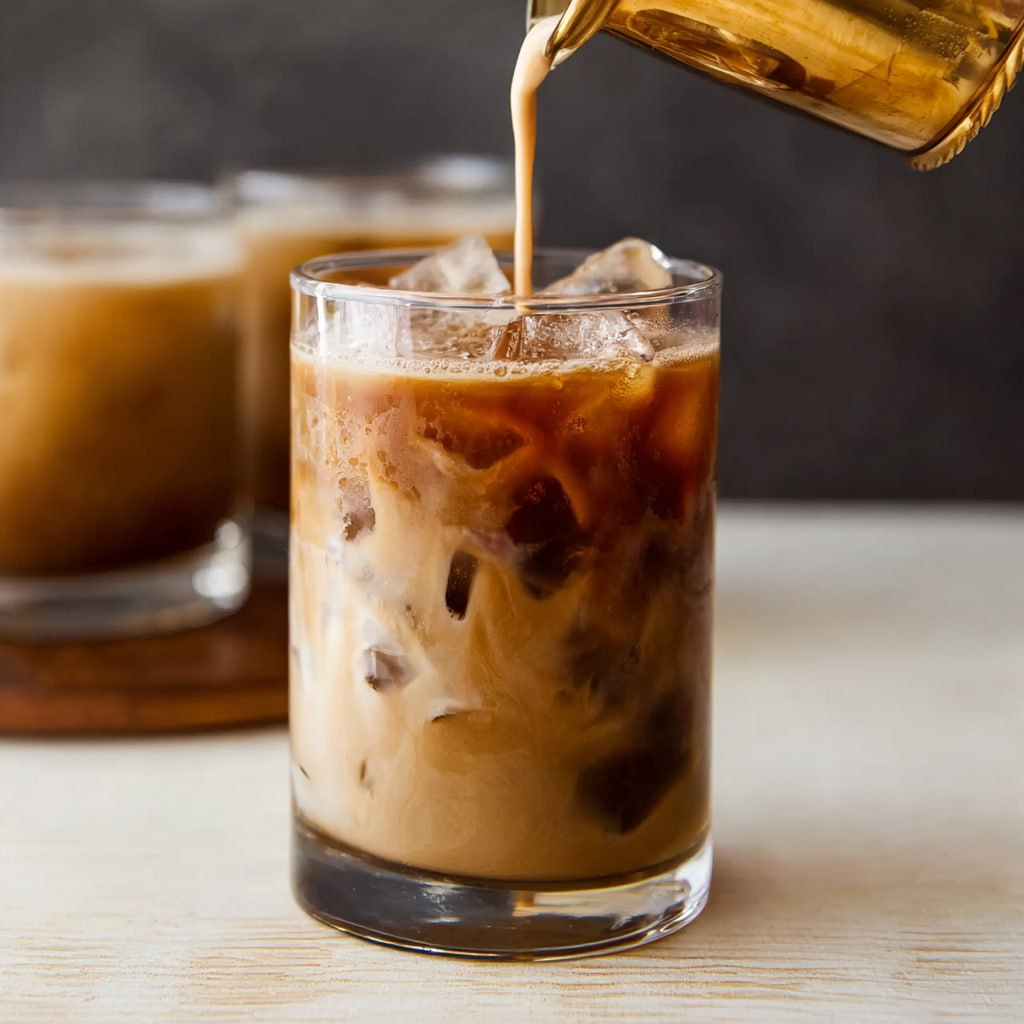
Fill a tall glass with ice — more than you think you need. The ice performs two functions: cooling and structure. Pour the cooled coffee concentrate over the ice. If using milk or cream, pour it slowly from the side of the glass — it will create the beautiful swirling visual as it sinks through the coffee and ice. Add any flavored syrups.
Do not stir immediately — let the layers sit for 10 seconds. Watch the cream ribbon through the dark coffee. Then give one slow stir from the bottom up and drink. This isn’t just aesthetic — the brief layering lets you taste the coffee’s full complexity before mixing with dairy.
Nutritional Information
Per serving (standard — 6 oz double-strength coffee + 2 oz whole milk + 1 tsp simple syrup):
- Calories: 60 | Protein: 2g | Fat: 2g | Carbs: 9g | Sugar: 7g | Caffeine: 120–180mg
Healthier Alternatives
- Unsweetened oat milk + liquid stevia: under 30 calories total
- Collagen peptides: add 10g protein with zero flavor impact
- Coffee ice cubes: prevent dilution as the drink sits
Serving Suggestions
- Classic: coffee + whole milk + simple syrup
- Healthy: black + 2 drops liquid stevia + cinnamon
- Indulgent: coffee + heavy cream + vanilla syrup
- Protein: coffee + fairlife milk or protein-enriched oat milk
Common Mistakes to Avoid
- Standard brew ratio (produces watery iced coffee) — always double the grounds
- Boiling water (produces bitterness) — cool to 195–205°F
- Adding granulated sugar to cold coffee (doesn’t dissolve) — use simple syrup or add while hot
- Not enough ice (coffee warms too fast) — fill the glass completely
Storing Tips
- Brew a large batch; refrigerate in a glass jar for up to 1 week
- Coffee ice cubes: freeze leftover coffee in ice trays — use these in iced coffee for zero dilution
- Cold brew: steep coarse grounds in cold water 16–24 hrs for a 2-week-shelf-life concentrate
Conclusion
The double-strength brew method is the one technique that solves every iced coffee problem — too weak, too watery, too bland. Master it once and every glass you make afterward is better than anything you’ll get from a coffee shop drive-through. Try this method tomorrow morning and drop your results in the comments — tell us what milk and syrup combo worked best for you!
FAQs
Q: Why is my iced coffee always bitter?
A: Two most common causes: water too hot (above 205°F) or over-extraction time (too fine a grind with too long a brew). Use 195–205°F water and a medium-coarse grind. For French press, don’t steep longer than 4 minutes.
Q: What’s the difference between cold brew and iced coffee?
A: Iced coffee = hot-brewed coffee over ice (ready in 10 minutes). Cold brew = coffee steeped in cold water 16–24 hours (smoother, less acidic, naturally sweeter, but requires planning). Both delicious; iced coffee is faster.
Q: How do I make iced coffee less watery without making it stronger?
A: Use coffee ice cubes instead of regular ice — they add zero water as they melt. Alternatively, let the coffee cool to room temperature before adding ice (reduces initial melt rate dramatically).
Q: Can I use instant coffee for iced coffee?
A: Yes — dissolve 2 teaspoons in 2 oz hot water, stir until completely dissolved, pour over ice. Works well in a pinch; not as nuanced as brewed coffee but perfectly usable.
Q: How do I make iced coffee for a crowd?
A: Cold brew is ideal for crowds — no heat involved, scales perfectly, keeps 2 weeks. Use 1 cup grounds per 4 cups cold water, steep 16 hours, strain, and serve from a pitcher. One batch serves 8–10 glasses.