How to Nail the Whole Foods Sonoma Chicken Salad at Home — Every Component Explained
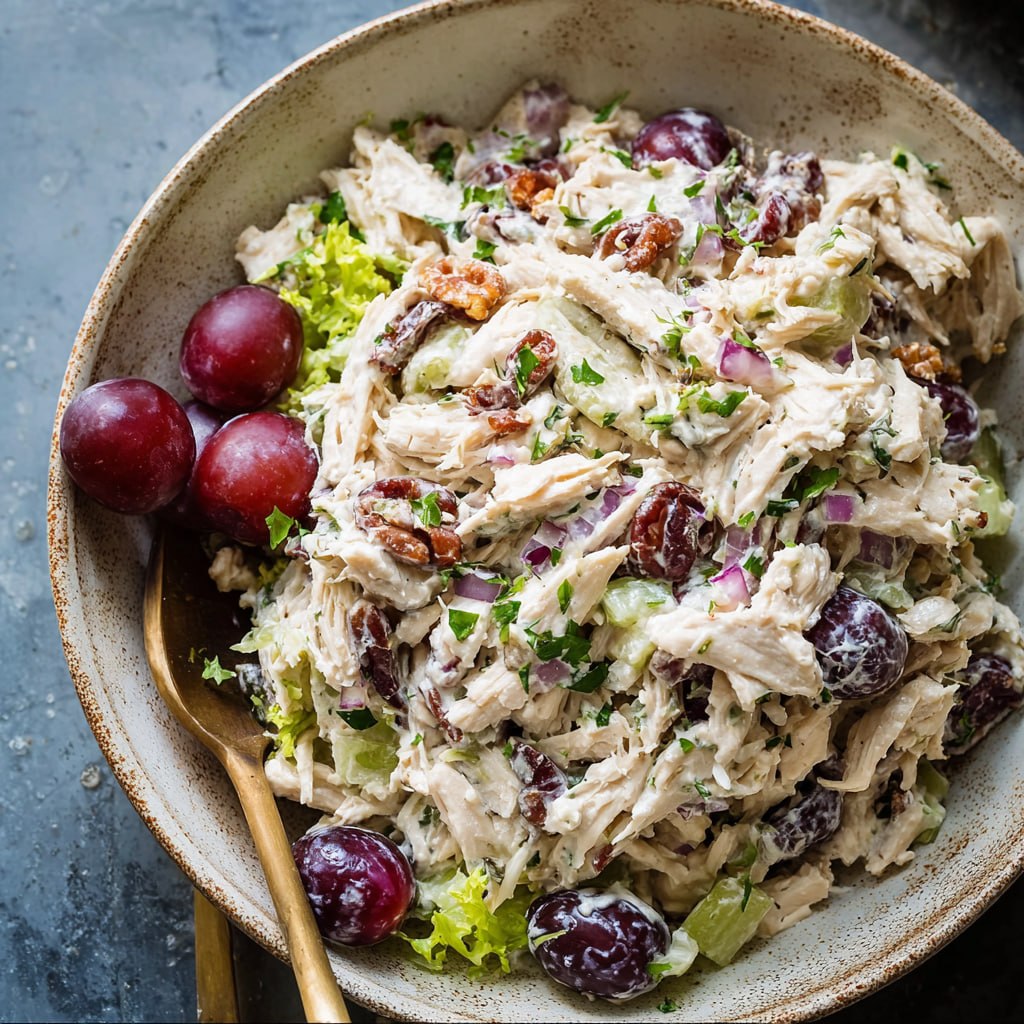
The reason Sonoma chicken salad works as a signature dish — something people recognize, remember, and specifically seek out — is the precise balance of five textural and flavor contrasts: tender chicken, sweet-juicy grapes, crunchy-nutty toasted pecans, crisp celery, and a tangy-sweet creamy dressing. None of these components is complicated alone. The skill is in how they’re combined, balanced, and a few key techniques that separate a good chicken salad from an exceptional one. This step-by-step guide covers every technique decision and why it matters.
Ingredients List
- 3 cups cooked chicken breast, shredded (1 rotisserie chicken, breast meat only)
- 1 cup red seedless grapes, halved and patted dry
- 3 stalks celery, thinly sliced on the bias
- ½ cup pecans, toasted and roughly chopped
- 3 green onions, white and light green parts, thinly sliced
- ½ cup good-quality mayonnaise
- 2 tablespoons Dijon mustard
- 1 tablespoon honey
- 1 tablespoon apple cider vinegar
- ½ teaspoon fine sea salt + freshly cracked pepper
Equipment: Large skillet, large mixing bowl, small bowl, whisk, wide spatula for folding.
Timing
- Prep: 20 min | Chill: 30 min minimum | Total: 50 min (overnight for best results)
Step 1 — Source and Prep Your Chicken Correctly
The single biggest upgrade you can make to any chicken salad is starting with properly prepared chicken. Options ranked by result quality:
- Best: Rotisserie chicken pulled while still warm. The roasted flavor adds depth; warm meat shreds more easily and absorbs dressing flavors better than cold.
- Very good: Poached chicken breast in seasoned water (bay leaf, peppercorns, half an onion). Tender, neutral — an excellent dressing canvas.
- Acceptable: Baked chicken breast at 375°F for 22–25 minutes. Rest 10 minutes before shredding.
- Avoid: Boiled plain chicken (flavorless), canned chicken (texture too soft), cold leftover chicken (doesn’t absorb dressing).
When shredding: use two forks and pull with the grain of the muscle fibers. This creates irregular pieces of varying size — more natural-looking and better-textured than uniformly diced chicken. Aim for pieces about 1 inch.
Step 2 — Toast Pecans: The Non-Negotiable Step
Heat a dry skillet (no oil) over medium heat. Add pecans in a single layer. Toast, stirring constantly, for 3–4 minutes — done when you smell a deep nutty fragrance and see slightly darkened color on each nut surface. Remove from heat immediately and transfer to a cutting board — residual pan heat will burn them if left in the skillet.
Let cool completely before chopping. Warm pecans crumble when chopped; cool pecans chop cleanly. Roughly chop into uneven pieces — you want unexpected crunchy moments, not uniformly fine crumbles.
Why this matters: Raw pecans in chicken salad are soft, oily-tasting, and forgettable. Toasted pecans are crunchy, fragrant, and nutty in a way that contrasts perfectly with the soft chicken and juicy grapes. This is the highest-impact technique step in the entire recipe.
Step 3 — Make the Dressing and Taste Before Mixing
Whisk mayonnaise, Dijon mustard, honey, apple cider vinegar, salt, and pepper until completely smooth. Taste directly — it should be:
- Creamy: Smooth, coats a spoon
- Tangy: Clear but not sharp acidity from the Dijon and vinegar
- Lightly sweet: Honey rounds everything — not dessert-sweet, just balanced
- Seasoned: Salt present but not dominant
Adjust now: more honey if too sharp, more vinegar if too flat, more Dijon if too bland. Once mixed into the salad, the dressing’s flavor is muted by the other ingredients and adjusting becomes difficult. Get it right in the bowl first.
Step 4 — Prepare Grapes and Celery
Halve grapes and spread on paper towels. Pat dry. Cut grapes release juice — that surface moisture will dilute the dressing and make the salad loose and wet by day 2. One minute of drying prevents this entirely. Slice celery thinly on the bias (at an angle) — bias-cut celery has more visual appeal and more surface area per slice, which means more crunch per bite. Use only the white and light green parts of green onions — dark green tops are too pungent and can make the salad bitter.
Step 5 — Fold, Don’t Stir
In a large bowl: chicken first, then grapes, celery, green onions, pecans last. Pour ¾ of the dressing over the top. Use a wide spatula to fold from the bottom of the bowl upward, rotating the bowl a quarter turn with each fold. After 6–8 folds, check: is every piece coated? Is there dressing pooling at the bottom? If pooling: fold 2–3 more times. If too dry: add remaining dressing and fold again. The goal is even coating without breaking the chicken or crushing the nuts.
Step 6 — Refrigerate and Finish
Cover and refrigerate 30 minutes minimum. Taste again before serving — cold mutes salt slightly, so you may need a pinch more. If the salad has thickened during refrigeration (chicken continues absorbing dressing), fold in a tablespoon of extra mayo to loosen. Serve immediately after removing from the fridge for maximum texture contrast.
Nutritional Information
Per serving (¼ recipe): Calories: 380 | Protein: 28g | Fat: 24g | Carbs: 14g | Fiber: 2g
Healthier Alternatives
- Half mayo, half Greek yogurt: saves 90 calories, adds protein
- Walnuts instead of pecans: higher omega-3 content
- Add diced apple: fiber and vitamin C
- Avocado-based dressing: no mayo, healthy fats
Serving Suggestions
- On a croissant with butter lettuce
- In avocado halves
- Over arugula with olive oil and lemon
- In lettuce cups for low-carb serving
Common Mistakes to Avoid
- Not toasting pecans (raw pecans = totally different, inferior ingredient)
- Stirring instead of folding (breaks chicken, crushes nuts)
- Not drying grapes (wet salad by day 2)
- Serving immediately without rest time (30 minutes of meld time is necessary)
Storing Tips
- Refrigerator: 3–4 days airtight
- Pecans: store separately for storage beyond 24 hours — they soften
- Do not freeze — mayo separates
Conclusion
Sonoma chicken salad is a masterclass in flavor and texture balance — six components, each contributing something specific, combined with technique that preserves what makes each one distinct. Follow these six steps and you’ll have a chicken salad that’s better than the deli version every time. Make it tonight and share your serving style in the comments!
FAQs
Q: Can I use chicken thighs instead of breast?
A: Yes — thigh meat is richer and more forgiving. It produces a more succulent chicken salad with deeper flavor. Fat content is higher, so calorie count increases slightly, but many prefer the texture of thigh meat in chicken salad.
Q: Why is my chicken salad dry the next day?
A: The chicken continues absorbing dressing during refrigeration. Add 1–2 tablespoons of extra mayo or Greek yogurt when re-serving and fold gently — it restores creaminess immediately. This is normal behavior, not a mistake.
Q: Can I add avocado?
A: You can, but avocado oxidizes quickly once cut. Either add just before serving, or serve the salad in avocado halves rather than mixing in. A squeeze of lemon juice slows oxidation if you do mix it in.
Q: What’s the best mayonnaise for chicken salad?
A: Duke’s, Hellmann’s, or Kewpie (Japanese mayo — slightly tangy and richer) all work excellently. Avoid light or fat-free mayo — the texture is thinner and the flavor notably different. Quality mayo matters when it’s a primary ingredient.
Q: Can I scale this for a party?
A: Yes — scales linearly. For 12 servings: 9 cups chicken, 3 cups grapes, 9 stalks celery, 1.5 cups pecans. Make dressing in proportion and adjust to taste. Refrigerate overnight — larger batches benefit from longer flavor development.