The Single Rule That Makes Roasted Carrots Perfect Every Time
Every roasted carrot problem I’ve ever seen — pale, soft, steamed-tasting, not caramelized — has one root cause: too many carrots on one pan. Understanding why this one rule matters makes everything else click into place. When you roast easy roasted carrots, you’re trying to create a specific environment: a very hot, dry surface where moisture evaporates instantly and the carrot’s natural sugars can caramelize directly on the pan. The moment you crowd the pan, the vegetables trap each other’s steam, the pan surface cools, and caramelization stops. That’s it — one rule, perfect carrots every time.
Ingredients List
- 1.5 lbs carrots (8–10 medium), peeled and cut diagonally into 1.5-inch pieces
- 2 tablespoons olive oil
- 1 tablespoon honey or maple syrup
- ½ teaspoon salt, ¼ tsp black pepper
- ½ teaspoon garlic powder
- ½ teaspoon dried thyme or rosemary
- Fresh parsley to finish
Equipment: Large rimmed baking sheet (half-sheet pan), mixing bowl, oven at 400°F.
Timing
- Prep: 5 min | Roast: 25–30 min | Total: 35 min
Step 1 — Peel, Cut, and Dry
Peel the carrots (use a Y-peeler — fastest and safest). Cut off the tops and tips, then cut each carrot diagonally into 1.5-inch pieces. Why diagonal? Diagonal cuts create a larger flat face per piece than a straight cut across the same carrot. More flat face area = more contact with the hot pan surface = more caramelization per piece. Every cut is intentional.
After cutting, spread on a clean kitchen towel and pat dry. This is underrated: surface moisture on the carrots evaporates in the first 5–8 minutes of roasting before the pan is hot enough to caramelize. Dry carrots reach caramelization temperature 30–40% faster than wet ones. One minute of drying saves 5 minutes of roasting time and dramatically improves the result.
Step 2 — Season in a Bowl, Not on the Pan
Add dried carrots to a large mixing bowl. Drizzle olive oil over them and toss to coat every surface. Add honey — it directly accelerates the Maillard reaction by introducing additional sugars to the surface. Sprinkle salt, pepper, garlic powder, and thyme. Toss again thoroughly — every piece should be glistening with a thin coat of oil and honey. Any dry, uncoated piece will char rather than caramelize.
Pro note: Season in a bowl, not directly on the baking sheet. On a pan, the oil pools in the center and the outer pieces stay dry. A bowl guarantees even coating on every surface of every carrot.
Step 3 — Pan Setup: The Non-Negotiable Single Layer
Preheat your oven to 400°F (205°C). While it preheats, arrange seasoned carrots on a large rimmed baking sheet in a strict single layer with at least ½ inch of space between pieces. If they don’t fit, use two pans. If you only have one pan, cook in two batches.
Visual check: Before putting the pan in the oven, look at it from the side. You should be able to see the pan surface clearly between pieces. If the surface is completely hidden by carrots, it’s overcrowded.
Use a dark or heavy baking sheet if possible — they absorb and retain heat better than thin, light-colored sheets, resulting in faster and more even caramelization on the bottom face.
Step 4 — Roast and Flip at the Right Moment
Roast on the center rack at 400°F. At the 15-minute mark, remove the pan and flip each piece using tongs or a thin spatula. The bottom face should be golden-brown — if it’s still pale after 15 minutes, your oven runs cool; give it another 3–4 minutes before flipping. After flipping, return to the oven for 12–15 more minutes.
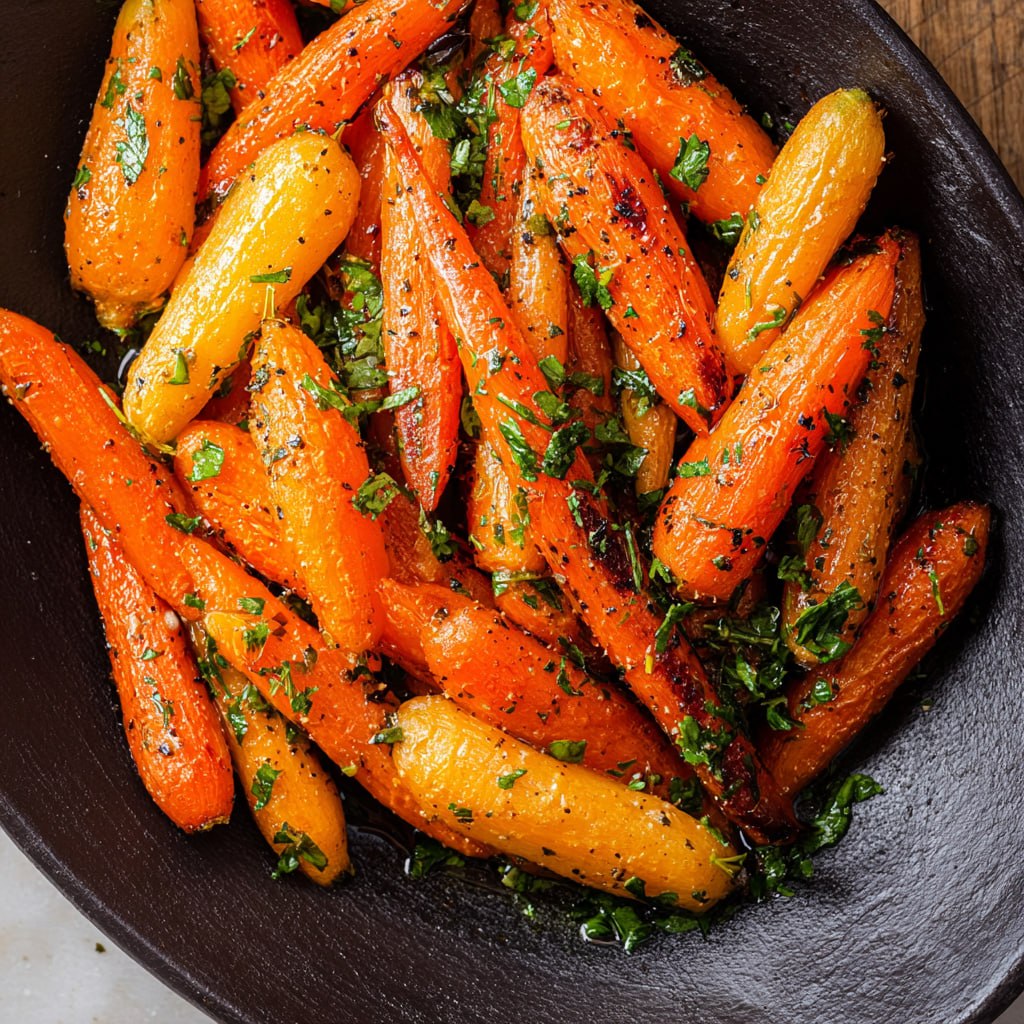
What to look for at 25–28 minutes total: The flat cut faces should be deep golden-brown to amber. The rounded sides should have some caramelization but less than the flat faces. A fork inserted into the thickest piece should meet no resistance. The edges may look slightly dark — this is correct, not burnt.
Step 5 — Rest 2 Minutes and Finish
Remove from the oven and rest on the pan for 2 minutes — the residual heat finishes any slightly underdone pieces and allows the caramelized exterior to set into a firm, almost slightly crispy texture. Transfer to a serving plate or bowl. Add fresh parsley or thyme now — herbs added before roasting burn at 400°F and become bitter. Fresh herbs added after provide bright color and raw herb flavor that contrasts beautifully with the rich, caramelized carrots.
Nutritional Information
Per serving (¼ recipe): Calories: 115 | Protein: 1.5g | Fat: 5g | Fiber: 4g | Vitamin A: 340% DV
Healthier Alternatives
- Skip honey for zero added sugar — natural sugars alone caramelize well
- Add turmeric + black pepper for anti-inflammatory benefits
- Use avocado oil for a higher smoke-point option
Serving Suggestions
- With roasted chicken and mashed potatoes — classic
- Cold in grain bowls with feta and tahini
- Blended into carrot soup with coconut milk
- As a snack with hummus
Common Mistakes to Avoid
- Overcrowding (the #1 mistake — every time)
- Not drying carrots before seasoning
- Not flipping halfway — bottom burns while top stays pale
- Oven below 375°F — no caramelization occurs
Storing Tips
- Refrigerator: 5 days airtight
- Reheat: air fryer 375°F 3 min or oven 400°F 5 min
- Freeze: technically possible but texture suffers — best eaten fresh or refrigerated
Conclusion
One rule — single layer — unlocks everything that makes roasted carrots spectacular. Follow the five steps above and you’ll never have pale, steamed, disappointing carrots again. Try this method tonight and share your results in the comments below!
FAQs
Q: Why do my roasted carrots always come out soft instead of caramelized?
A: Overcrowding. The carrots are steaming each other. Use two pans or reduce the quantity per pan to guarantee single-layer spacing.
Q: Can I roast carrots at a lower temperature for longer?
A: You can, but caramelization requires high heat. At 350°F, the carrots will soften and eventually caramelize, but it takes 45–50 minutes and the results are less dramatic. 400°F is the sweet spot for speed and quality.
Q: Should I add garlic cloves to roast with the carrots?
A: Yes — add 4–5 smashed garlic cloves to the pan with the carrots. They caramelize alongside and become sweet, soft, and spreadable. Squeeze them onto bread or mix them into the finished dish.
Q: Do I need to flip the carrots?
A: Yes — the bottom face gets direct pan heat and caramelizes faster than the top. Flipping once at 15 minutes ensures both faces develop color and the pieces cook evenly throughout.
Q: Can I roast carrots with other vegetables at the same time?
A: Yes — add similarly-sized pieces of parsnips, beets, or sweet potatoes to the same pan. They all roast at 400°F in similar timeframes. Keep the single-layer rule — it applies regardless of which vegetables you use.