Why the Yogurt Marinade Is the Most Efficient Chicken Technique You’ll Learn
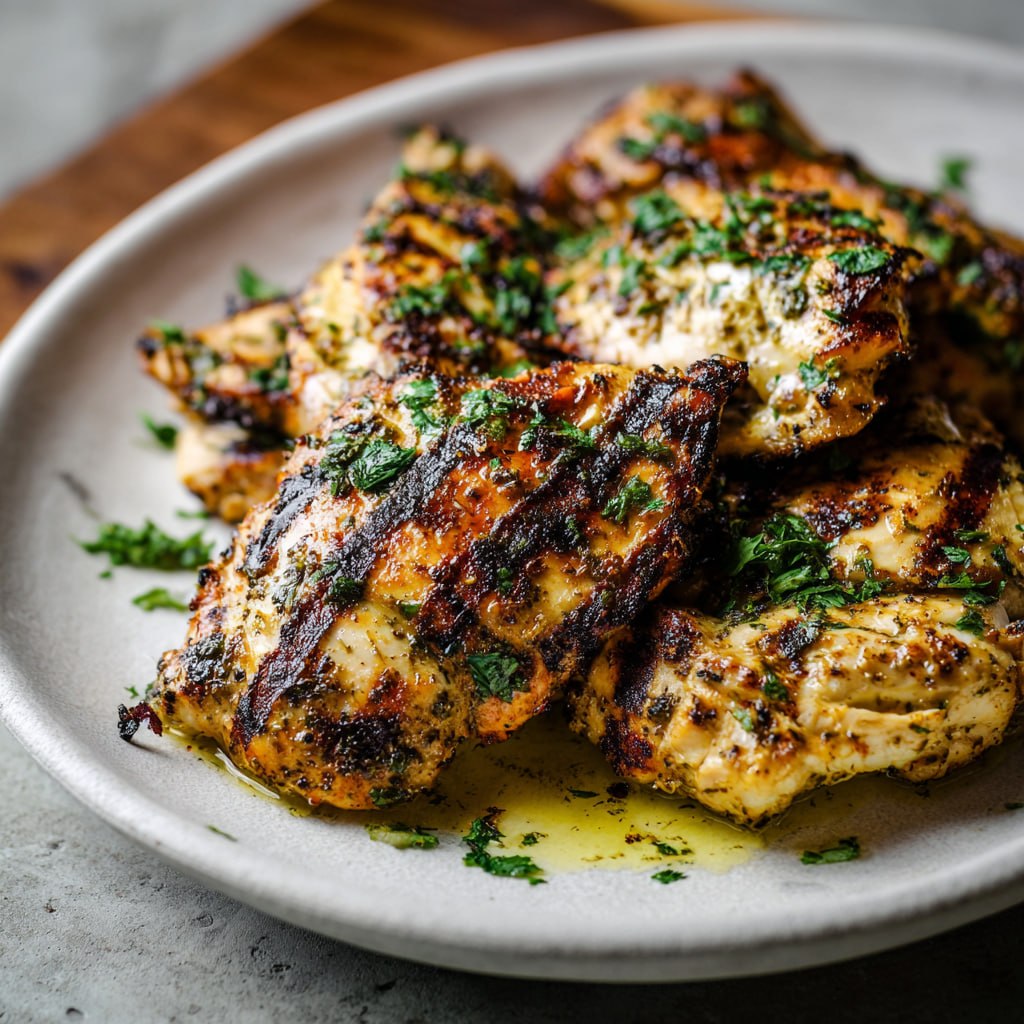
I’ve tested yogurt marinated chicken against vinegar marinades, buttermilk brines, and dry-seasoned chicken using the same cook time on the same grill — and yogurt wins every single time on juiciness. The reason is precision chemistry: lactic acid tenderizes gently, fat carries flavor into the meat, and protein in the yogurt forms a protective coating that prevents moisture loss during high-heat cooking. Let me walk you through every step so you get the exact same result I do, every time.
Ingredients List
- 4 boneless, skinless chicken breasts (6 oz each)
- 1 cup full-fat Greek yogurt
- 3 cloves garlic, finely minced
- 1 tablespoon olive oil
- 1 tsp cumin, 1 tsp smoked paprika, ½ tsp turmeric
- ½ tsp salt, ½ tsp black pepper
- Juice of ½ lemon
Equipment: Large bowl, sharp knife, instant-read thermometer, grill or cast iron pan, tongs.
Timing
- Prep: 10 minutes
- Marinate: 2–24 hours (overnight ideal)
- Cook: 14–16 minutes active
- Total: 30 minutes active time
Step 1 — Make the Marinade
Combine Greek yogurt, minced garlic, olive oil, all spices, salt, pepper, and lemon juice in a large bowl. Whisk until fully incorporated — the marinade should have a uniform golden color from the turmeric and paprika. Taste it now. If it doesn’t taste bold and exciting at this stage, add more salt or spice. Remember: some marinade scrapes off before cooking, so season assertively.
Step 2 — Score the Chicken Precisely
Place each chicken breast flat on a cutting board. Using a sharp knife, make 3–4 diagonal cuts on the top surface — each cut should be ½ inch deep, spaced about 1 inch apart. Flip and repeat on the other side. Why this matters: unscored chicken creates a barrier where marinade sits on the surface but can’t penetrate. Scored chicken allows the lactic acid to reach 80% deeper into the muscle tissue — that’s the difference between a coated chicken and a marinated one.
Step 3 — Coat and Refrigerate
Add the scored chicken to the marinade bowl. Use your hands (or tongs) to coat every surface, pressing the marinade firmly into the score marks. Every surface — top, bottom, sides, inside the cuts — should be covered. Cover the bowl with plastic wrap or use a zip-lock bag. Refrigerate for a minimum of 2 hours. For the juiciest results, marinate overnight (8–12 hours). The color will shift as the turmeric penetrates — completely normal and beautiful.
Step 4 — Prep for Cooking
Remove chicken from the refrigerator 20 minutes before cooking — tempering prevents the thermal shock of cold chicken hitting a hot cooking surface, which causes surface overcooking. Using your hand or a paper towel, scrape off most (not all) of the marinade. A thin, even coating should remain on the surface. Too much marinade: burns and creates bitterness before the chicken cooks through. Too little: dry surface without the protective coating.
Step 5 — High-Heat Cook for the Perfect Crust
Preheat your grill to 400°F (medium-high) or heat a cast iron pan on medium-high for 3 minutes before adding the chicken. The surface must be hot enough to immediately caramelize the yogurt coating — if it sizzles loudly when you place the chicken, you’re at the right temperature. If it doesn’t sizzle, the pan isn’t hot enough.
Place chicken and do not move it for 7–8 minutes. This is the hardest part — resist the urge to check, flip early, or adjust. The yogurt coating creates a crust that will release naturally from the grill or pan surface when it’s ready; prying it off early tears the crust and loses the juices underneath it.
Flip once at 7–8 minutes. Cook the second side for 6–7 minutes. Insert your instant-read thermometer into the thickest part — you need 165°F to ensure food safety throughout.
Step 6 — Rest, Slice Correctly, and Serve
Transfer chicken to a cutting board and rest for 5 full minutes. This is non-negotiable: during rest, the center temperature equalizes and the proteins relax, allowing redistributed juices to settle throughout the meat. Cutting immediately releases these juices as a puddle on your board instead of into the bite.
After resting, slice against the grain (perpendicular to the direction of the muscle fibers, which run lengthwise on a chicken breast). Slicing against the grain shortens the muscle fiber strands — what feels “tender” is actually the knife doing the work your teeth would otherwise need to do. This makes even regular chicken feel more tender; with already-marinated chicken, it’s remarkably silky.
Nutritional Information
Per serving (one 6 oz cooked chicken breast):
- Calories: 285 | Protein: 48g | Fat: 7g | Carbs: 5g | Sodium: 480mg
Healthier Alternatives
- Coconut yogurt for dairy-free with same tenderizing effect
- Double the turmeric + add ½ tsp black pepper (increases curcumin absorption 2,000%)
- Use chicken thighs for higher fat content — even more forgiving on the grill
Serving Suggestions
- Mediterranean grain bowl with quinoa, cucumber, and tahini
- Sliced in warm pita with hummus and pickled onions
- Cold over arugula with lemon vinaigrette for meal prep salads
Common Mistakes to Avoid
- Not scoring the chicken — marinade only sits on the surface
- Moving chicken before the crust has set — tears the coating
- Leaving too much marinade on — burns before chicken cooks through
- Skipping the rest — loses up to 30% of juice on the cutting board
Storing Tips
- Refrigerator: airtight container, 4 days
- Reheat: sliced in covered pan with splash of water, 2 minutes
- Freeze raw in marinade: up to 3 months
Conclusion
The yogurt marinade is the single technique that most dramatically improves chicken — and it costs nothing extra. Master the 6 steps above and you’ll have the most consistently juicy grilled chicken in your cooking repertoire, every time. Try it this week and share your results below!
FAQs
Q: What makes Greek yogurt better than regular yogurt for marinating?
A: Greek yogurt’s thicker consistency (2x the protein content of regular yogurt) creates better adhesion to the chicken surface, delivers more lactic acid per gram, and forms a superior protective crust during cooking.
Q: Can I marinate chicken in yogurt for too long?
A: Yes — beyond 24 hours, the surface texture becomes slightly mushy as lactic acid over-tenderizes the proteins. Overnight (8–12 hours) is the sweet spot.
Q: How do I know when to flip the chicken?
A: The chicken will release naturally from the grill grates or pan when the crust is properly set — usually 7–8 minutes at medium-high heat. If you have to pull hard to flip, wait another 60 seconds.
Q: Can I use this marinade for other proteins?
A: Yes — works beautifully on lamb chops (marinate 4–6 hours), salmon (marinate only 30–60 minutes — longer causes texture issues), and pork tenderloin (marinate 4–8 hours).
Q: How do I get the beautiful char marks without a grill?
A: Use a ridged cast iron grill pan on high heat — preheat for 4–5 minutes until it’s extremely hot. Press the chicken firmly onto the ridges when placing. You’ll get nearly identical grill marks to an outdoor grill.