Follow Me On Social Media!
The Best Cranberry Lemon Bars: A Sweet-Tart Winter Masterpiece

Introduction
Did you know that according to baking trend analysis, the demand for “citrus desserts” spikes by 60% in January and February? After months of heavy chocolates and spiced cookies, our palates naturally crave brightness and acidity. But why stop at simple lemon bars?
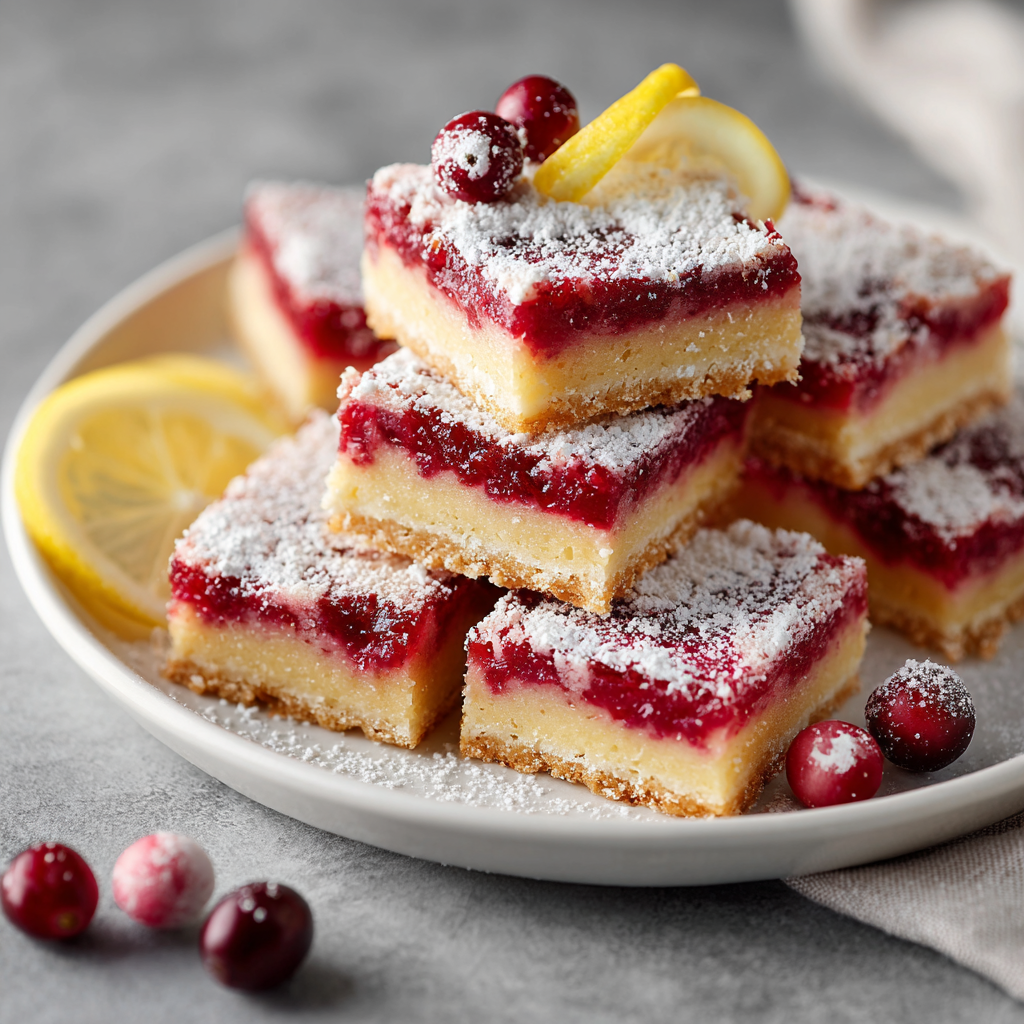
These Cranberry Lemon Bars are the ultimate evolution of the classic nursery treat. By introducing tart, ruby-red cranberries to the traditional lemon curd custard, we create a flavor profile that is scientifically balanced: the floral bitterness of the cranberry skins cuts through the sugar, while the lemon juice provides the citric acid necessary to set the eggs. The result is a bar that is visually stunning—streaked with pink and gold—and texturally perfect, featuring a buttery shortbread crust that snaps rather than crumbles. In this guide, we will cover the importance of “par-baking,” how to prevent the dreaded “eggy” taste, and why fresh cranberries are the superior choice for texture.
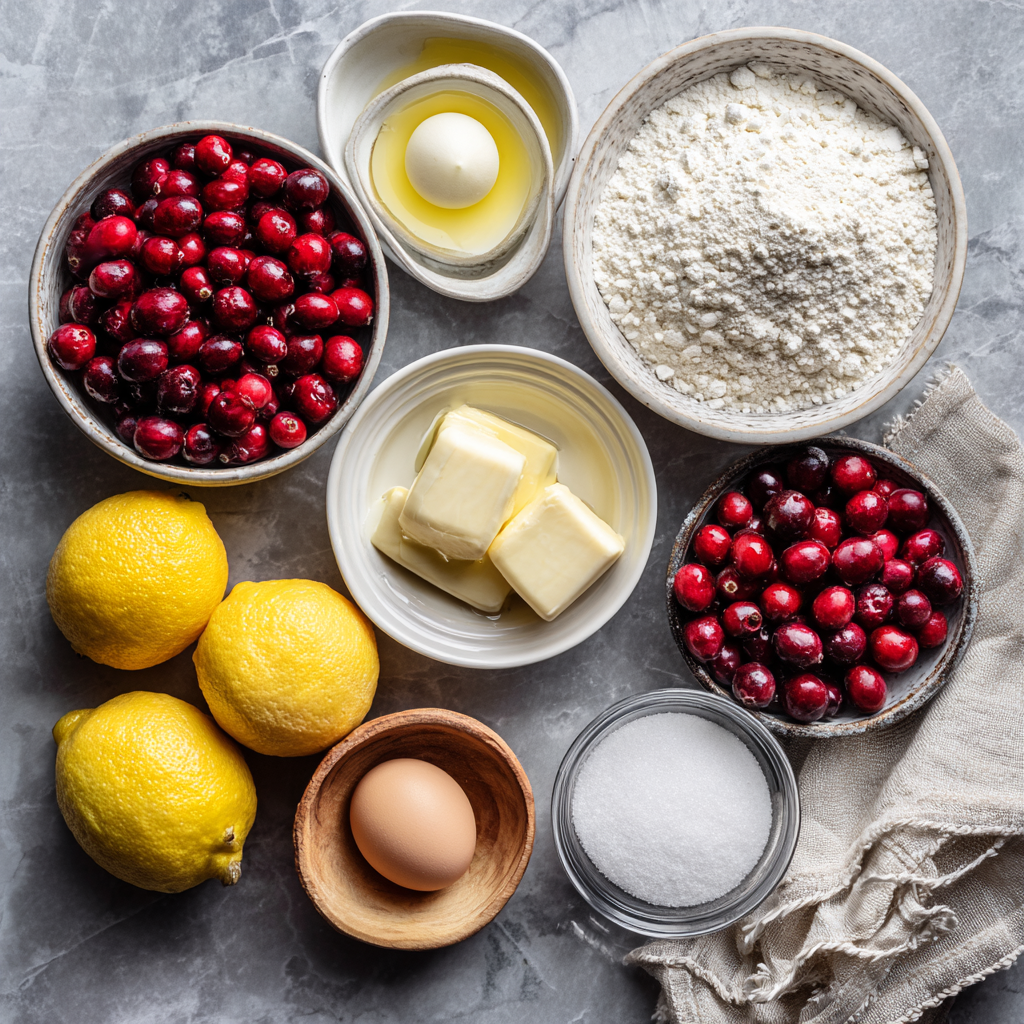
Ingredients List
To achieve the perfect ratio of crisp base to creamy top, precision is key.
The Shortbread Crust
- Unsalted Butter (1 cup / 2 sticks): Melted.
- Why Melted? Melted butter creates a denser, chewier crust closer to a cookie, whereas cold butter creates a flaky, pastry-like crust that can fall apart under the heavy filling.
- Granulated Sugar (½ cup): Adds sweetness and crunch.
- All-Purpose Flour (2 cups): The structural backbone.
- Salt (¼ tsp): To balance the butter.
- Vanilla Extract (1 tsp): Adds aromatic depth.
The Cranberry Lemon Filling
- Fresh Cranberries (1 ½ cups):
- Prep: Simmered down into a rough compote or relish. This ensures they are soft enough to eat without ruining the custard’s texture.
- Granulated Sugar (2 cups): Divided (some for the cranberry, most for the lemon).
- Eggs (4 large): Room temperature. These provide the protein coagulation that sets the bar.
- Fresh Lemon Juice (¾ cup): Approx. 3–4 lemons. Bottled juice lacks the zest oils and will taste flat.
- Lemon Zest (1 tbsp): Where the actual lemon flavor lives.
- All-Purpose Flour (½ cup): Used to stabilize the custard so it cuts cleanly.
- Baking Powder (½ tsp): A small amount helps the filling puff slightly, creating a lighter texture.
Timing
These bars require cooling time to set properly, so plan accordingly.
- Prep Time: 25 minutes
- Cook Time: 45–50 minutes (split between crust and filling)
- Cooling Time: 2 hours
- Total Time: Approx. 3 hours 15 minutes
- Efficiency Stat: By making the cranberry puree while the crust par-bakes, you utilize “active waiting” time, making the workflow seamless.
Step-by-Step Instructions
Step 1: The Crust Construction (H3)
Preheat oven to 350°F (175°C). Line a 9×13 inch baking pan with parchment paper, leaving an overhang on the sides for easy lifting. In a medium bowl, mix the melted butter, sugar, vanilla, and salt. Stir in the flour until a thick dough forms. Press the dough firmly and evenly into the bottom of the pan.
- Tip: Use the bottom of a flat measuring cup to compress the crust. A tight pack prevents the filling from leaking through to the bottom.
Step 2: The Par-Bake (H3)
Bake the crust for 15–20 minutes until the edges are lightly golden.
- Science Check: This step is non-negotiable. If you pour liquid filling onto raw dough, the dough will absorb the liquid and remain raw/soggy (the “soggy bottom” phenomenon).
Step 3: The Cranberry Breakdown (H3)
While the crust bakes, place the cranberries and ½ cup of sugar in a small saucepan over medium heat. Cook for 5–7 minutes until the berries burst and become jammy. Remove from heat and let cool slightly.
Step 4: The Lemon Custard (H3)
In a large bowl, whisk together the remaining 1 ½ cups sugar, flour, and baking powder. Whisk in the eggs, lemon juice, and lemon zest until smooth and combined.
- Technique: Whisk gently. You want to combine ingredients, not incorporate air bubbles (which create an unsightly foamy top).
Step 5: The Marbling and Bake (H3)
Pour the lemon filling over the hot crust. Drop spoonfuls of the cranberry mixture randomly over the lemon filling. Use a knife or skewer to gently swirl the red cranberry into the yellow lemon. Bake for 30–35 minutes.
- Doneness Cue: The center should no longer jiggle like water, but it should still have a slight “wobble” like set gelatin. It will firm up as it cools.
Step 6: The Set (H3)
Remove from oven and let cool completely on a wire rack (approx. 1 hour), then transfer to the fridge for another hour.
- The Cut: Lift the bars out using the parchment paper. Dust generously with powdered sugar before slicing into squares.
Nutritional Information
A vibrant treat that offers a dose of Vitamin C with its indulgence.
Per Bar (Yields 24 small squares):
- Calories: ~160 kcal
- Total Fat: 6g
- Saturated Fat: 3.5g
- Carbohydrates: 26g
- Sugars: 18g
- Protein: 2g
Data Insight: Cranberries are rich in proanthocyanidins (antioxidants), adding a small functional benefit to the dessert that pure lemon bars lack.
Healthier Alternatives for the Recipe
We can modify the sugar and flour content for different dietary needs.
- Gluten-Free:
- Swap: Use a 1:1 Gluten-Free All-Purpose Flour (rice/tapioca blend) for both the crust and filling. The texture is almost indistinguishable.
- Lower Sugar:
- Swap: Lemon bars rely on sugar for structure, not just taste. However, you can reduce the sugar in the filling by ¼ cup without ruining the set. For a larger reduction, use a baking-friendly sweetener like Monk Fruit.
- Dairy-Free:
- Swap: Replace the butter in the crust with melted Coconut Oil or a vegan butter block. The lemon filling is naturally dairy-free (no cream required).
Serving Suggestions
Elevate the presentation for a holiday spread or tea party.
- The Double Dust: Dust with powdered sugar once when warm (it melts into a glaze) and again right before serving (for the snowy look).
- Whipped Cream: A dollop of unsweetened whipped cream balances the intense tartness of the lemon and cranberry.
- Garnish: Top each square with a tiny sprig of fresh mint or a candied lemon peel for a professional finish.
- Pairing: Serve with a hot cup of black tea or an espresso. The tannins in tea cleanse the palate of the rich custard.
Common Mistakes to Avoid
Citrus bars can be tricky. Here is what the data says goes wrong.
- The “Scrambled Egg” Effect:
- Mistake: Adding eggs to hot lemon juice or overbaking.
- Result: Bits of cooked egg white in the smooth yellow curd.
- Fix: Mix the filling at room temperature and pull the bars from the oven while they are still slightly wobbly.
- The Soggy Bottom:
- Mistake: Skipping the par-bake or pouring filling on a cool crust.
- Result: A doughy, wet layer between the crust and filling.
- Fix: Pour the filling while the crust is still hot from the oven. This seals the dough instantly.
- The Metallic Taste:
- Mistake: Using a metal pan without parchment paper.
- Result: The acid in the lemon reacts with aluminum/steel, creating a tinny flavor.
- Fix: Always use glass/ceramic, or line your metal pan thoroughly with parchment.
Storing Tips for the Recipe
Lemon bars are essentially a refrigerator dessert.
- Fridge: Store in an airtight container for up to 5 days. The crust will soften slightly over time, becoming more cake-like.
- Freezer: These freeze exceptionally well.
- Cut the cooled bars.
- Place on a tray to freeze solid.
- Wrap individual bars in plastic wrap.
- Store for up to 3 months. Thaw in the fridge overnight or eat semi-frozen for a refreshing treat.
- Sugar Warning: Do not dust with powdered sugar if storing. The sugar will absorb moisture and turn into a sticky goo. Dust only right before eating.
Conclusion
Cranberry Lemon Bars are the perfect bridge between the festive season and the fresh promise of spring. They offer a sophisticated complexity—tart, sweet, buttery, and bitter—that simple sugar cookies cannot match. Whether you are using up leftover holiday cranberries or just need a burst of sunshine on a gray day, this recipe delivers.
Ready to bake? Preheat that oven and zest those lemons! If you try this recipe, snap a photo of your beautiful swirls and tag us. Leave a 5-star review below if you loved the balance of flavors, and subscribe for more science-backed baking guides.
FAQs
1. Can I use frozen cranberries? Yes, absolutely. You do not need to thaw them first. Just add them to the saucepan with the sugar; they may take 2–3 minutes longer to burst and thicken.
2. Why did my topping crack? Cracks usually happen if the filling was over-whisked (too much air incorporated) or over-baked (dried out). To hide cracks, simply apply a heavy layer of powdered sugar!
3. Can I use orange juice instead of lemon? You can, but oranges are much sweeter and less acidic than lemons. The bars will be sweeter and may not set as firmly. If you use orange, replace half the juice with lime juice to maintain the necessary acidity.
4. My filling is too runny. What happened? You likely under-baked it, or you didn’t measure the flour correctly (too little). Lemon bars need to cool completely in the fridge to set fully. If they are still runny after chilling, they needed more time in the oven.