Follow Me On Social Media!
Spicy Gochujang Deviled Eggs: The “Umami-Heat” Fusion

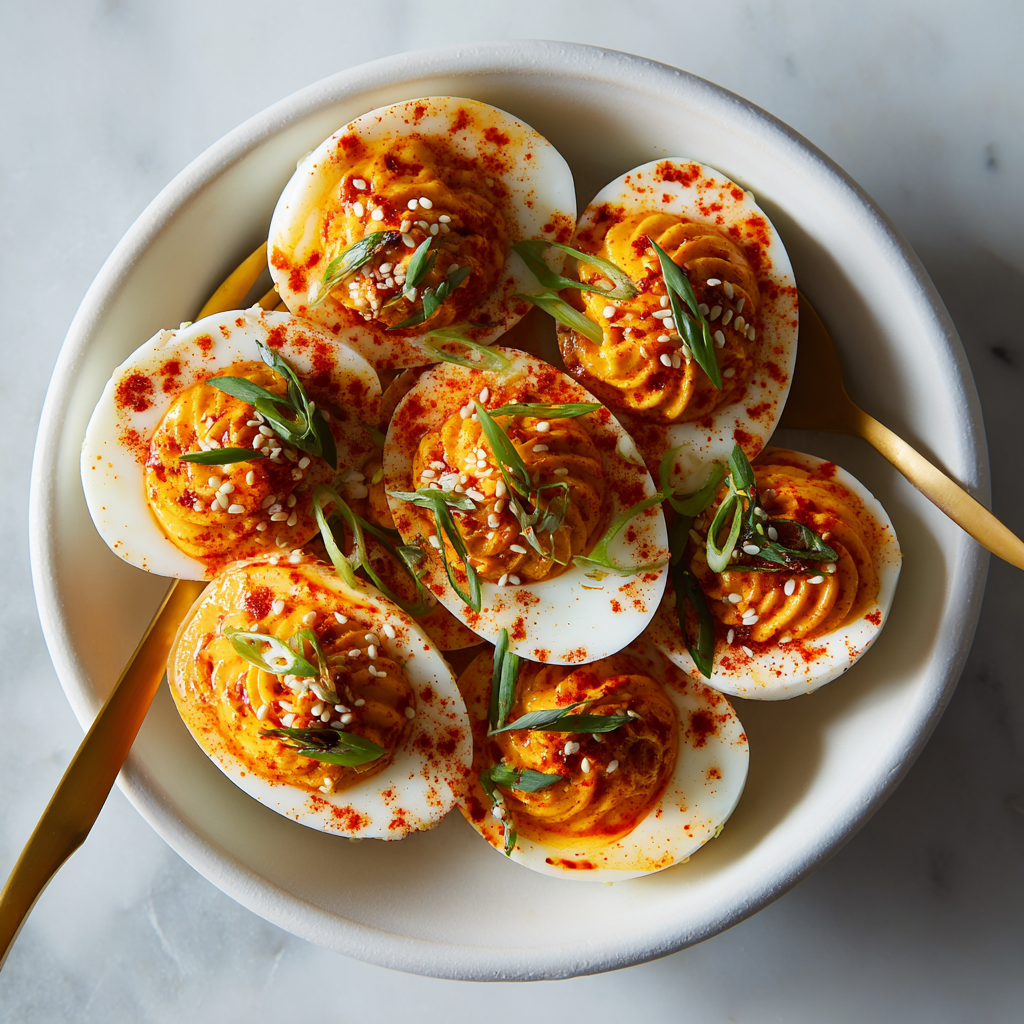
The Chemistry of Gochujang and Yolks
In 2026, the trend of “Global Fusion” has transformed the humble deviled egg. Traditional deviled eggs rely on mustard for “zing.” By swapping mustard for Gochujang (Korean fermented chili paste), we introduce a complex flavor profile: the capsaicin in the peppers provides heat, the glutamates from the fermented soybeans provide deep umami, and the glutinous rice in the paste adds a subtle sweetness.
When emulsified with the fats of the egg yolk and mayonnaise, you create a velvety, “punchy” filling that is far more sophisticated than the classic version.
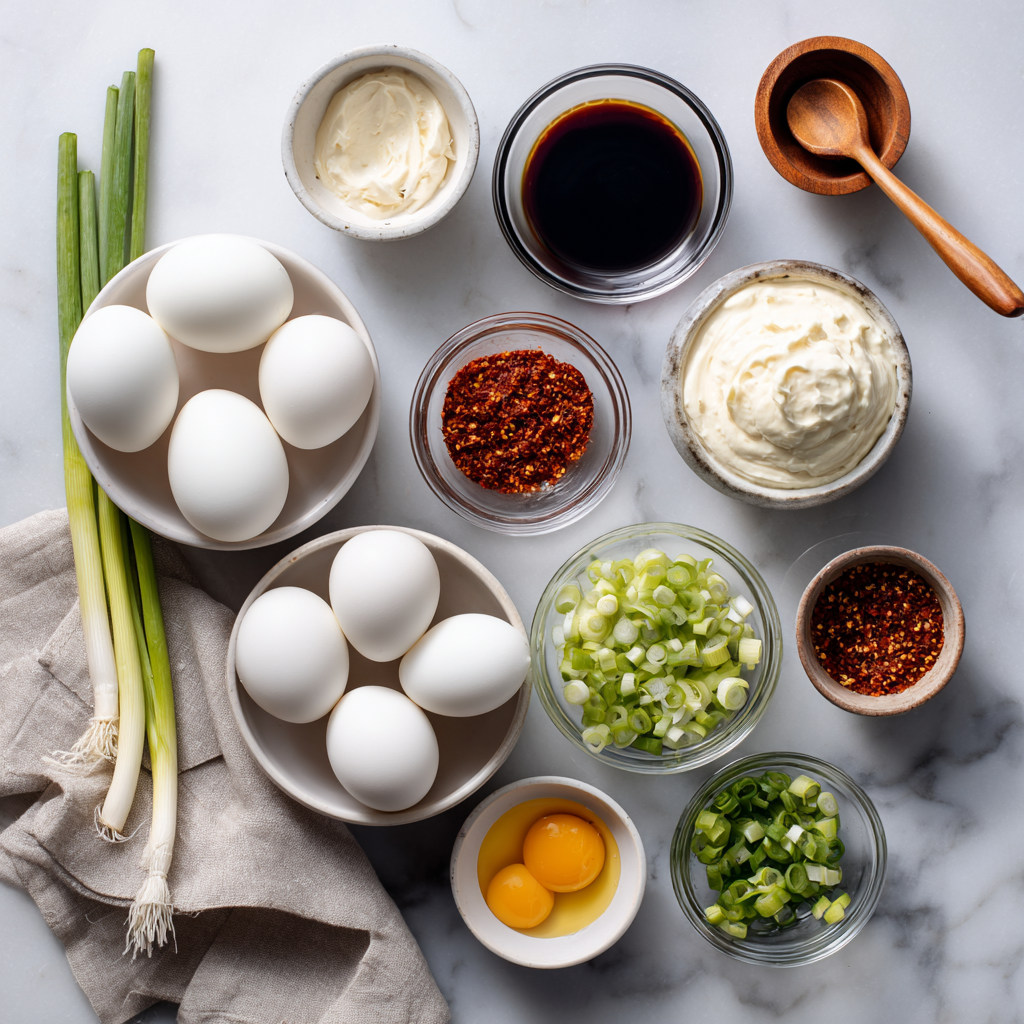
Ingredients List
- The Protein: * Large Eggs (6): Hard-boiled and halved.
- The “Fire” Filling:
- Mayonnaise (1/4 cup): For the creamy emulsion.
- Gochujang Paste (1–2 tsp): Adjust based on your heat tolerance.
- Rice Vinegar (1 tsp): To provide the essential acid “snap.”
- Toasted Sesame Oil (1/2 tsp): For an aromatic, nutty finish.
- The “Street-Style” Garnish:
- Toasted Black Sesame Seeds.
- Finely Sliced Green Onions.
- Kimchi (Finely minced, optional): For an extra fermented crunch.
Nutritional Information (Per Egg Half)
Based on 12 servings.
| Nutrient | Amount |
| Calories | 75 kcal |
| Total Fat | 6g |
| Net Carbohydrates | 1.5g |
| Protein | 3.5g |
| Sodium | 110mg |
Export to Sheets
Timing: The “Perfect Peel” Routine
- Prep/Boil: 15 minutes.
- Chilling: 30 minutes.
Step-by-Step Instructions
Step 1: The “12-Minute” Egg
Place eggs in a single layer in a pot of cold water. Bring to a boil, then remove from heat, cover, and let sit for exactly 12 minutes.
Actionable Advice: Immediately plunge the eggs into an ice bath for 10 minutes. The thermal shock shrinks the egg away from the shell, making them significantly easier to peel.
Step 2: The Emulsion
In a small bowl, mash the egg yolks with a fork until they look like fine sand. Add the mayonnaise, Gochujang, rice vinegar, and sesame oil. Whisk until the mixture is completely smooth.
- Expert Insight: If the mixture is too stiff, add a teaspoon of water or more mayo. The texture should be like thick frosting.
Step 3: The “Kimchi” Fold (Optional)
If using minced kimchi, fold it in gently with a spatula now. This adds a hidden “spark” of acidity inside the creamy yolk.
Step 4: The Piping
Use a piping bag (or a Ziploc bag with the corner snipped) to fill the egg white cavities.
- The 2026 Aesthetic: Instead of a simple star-tip, try a “swirl and peak” motion to give the eggs a modern, architectural look.
3 Modern Garnish Variations
| Style | Garnish | Why It Works |
| The “Crunch” | Crispy Fried Shallots | Provides a texture contrast to the creamy center. |
| The “Sea” | Shredded Nori (Seaweed) | Enhances the natural umami of the Gochujang. |
| The “Spice” | Shichimi Togarashi | A Japanese 7-spice blend that adds a final “kick” of heat. |
Export to Sheets
Common Mistakes to Avoid
- Over-Boiling: If your yolks have a grey/green ring, they are overcooked and will taste sulfurous. Stick to the 12-minute rule!
- Clumpy Gochujang: Some Gochujang brands are very thick. Whisk it with the rice vinegar before adding the yolks to ensure it distributes evenly.
- Filling Too Early: Deviled eggs can “weep” (release moisture) if they sit too long. For the best presentation, pipe the filling no more than 2 hours before serving.
The Pro Tip: “The Mayo Swap”
For a tangier, lower-calorie version, you can swap half the mayonnaise for Japanese Kewpie Mayo or Plain Greek Yogurt. Kewpie uses only egg yolks (no whites) and MSG, which makes the Gochujang flavors “explode” even more.
Would you like me to help you create a “Quick Pickled Radish” recipe to serve as a side garnish for these eggs?