Follow Me On Social Media!
Reindeer Macarons: The “Aerated Stability” Method

The Science of the “Macaronage”
Creating macarons is a feat of Structural Polymerization. The goal is to create a meringue that is strong enough to hold air, yet fluid enough to settle into a smooth “shell.”
- The Meringue Matrix: By using the Italian Method (pouring hot sugar syrup into whipping egg whites), we create a more stable protein bond than the French method. This is crucial for reindeer macarons, as we often add extra weight through decorations like pretzels or heavy ganache.
- The Skin Formation: In 2026, we utilize forced-convection drying. Letting the piped shells sit under a fan for 30–45 minutes creates a “pellicle” or dry skin. This forces the air to escape through the bottom during baking, creating the iconic “feet” (pieds) and preventing the tops from cracking under the weight of the reindeer antlers.
Ingredients List
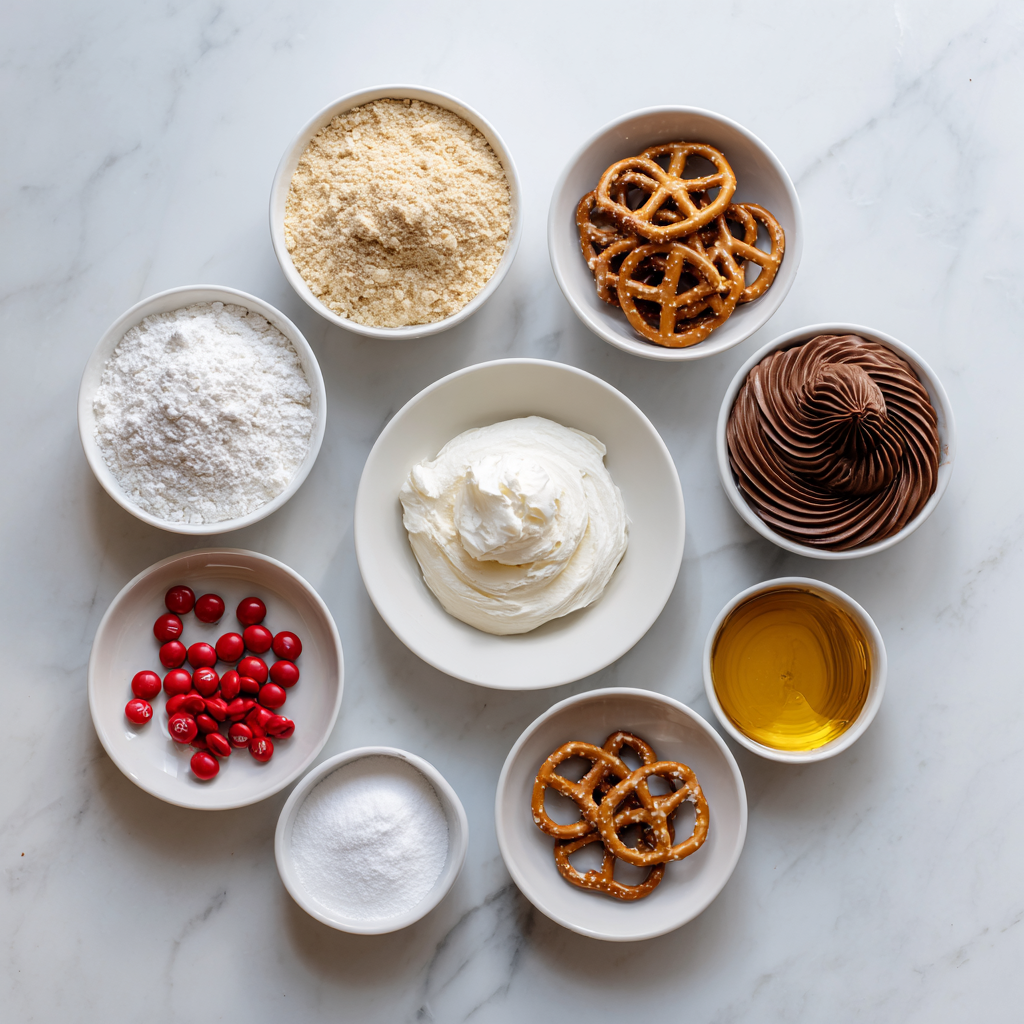
- The Shell Base:
- Almond Flour (212g): Super-fine and sifted twice.
- Powdered Sugar (212g).
- Cocoa Powder (25g): To give the reindeer their brown color.
- Egg Whites (82g + 82g): Aged at room temperature for 24 hours.
- The Sugar Syrup:
- Granulated Sugar (236g).
- Water (60ml).
- The Reindeer Decor:
- Mini Pretzels: For the antlers.
- Red M&Ms or Royal Icing: For the “Rudolph” nose.
- White/Black Icing: For the eyes.
Timing: The “Precision” Schedule
- Prep/Sifting: 20 minutes.
- Macaronage: 10 minutes.
- Drying: 45 minutes.
- Baking: 12–14 minutes.
Step-by-Step Instructions
Step 1: The “Tant pour Tant”
Sift the almond flour, powdered sugar, and cocoa powder together. Mix in the first 82g of egg whites to form a thick, chocolatey paste. Cover this to prevent it from drying out.
Step 2: The Italian Meringue
Bring the water and granulated sugar to 244°F (118°C). Meanwhile, whip the second 82g of egg whites to soft peaks. Slowly pour the hot syrup into the whites while whisking on high. Continue whisking until the bowl feels barely warm and you have stiff, glossy peaks.
Step 3: The Macaronage
Gently fold the meringue into the chocolate almond paste.
The 2026 Texture Test: The batter is ready when it falls off the spatula in a continuous “ribbon” that disappears back into the mix after 10–15 seconds.
Step 4: Piping and “Antler” Integration
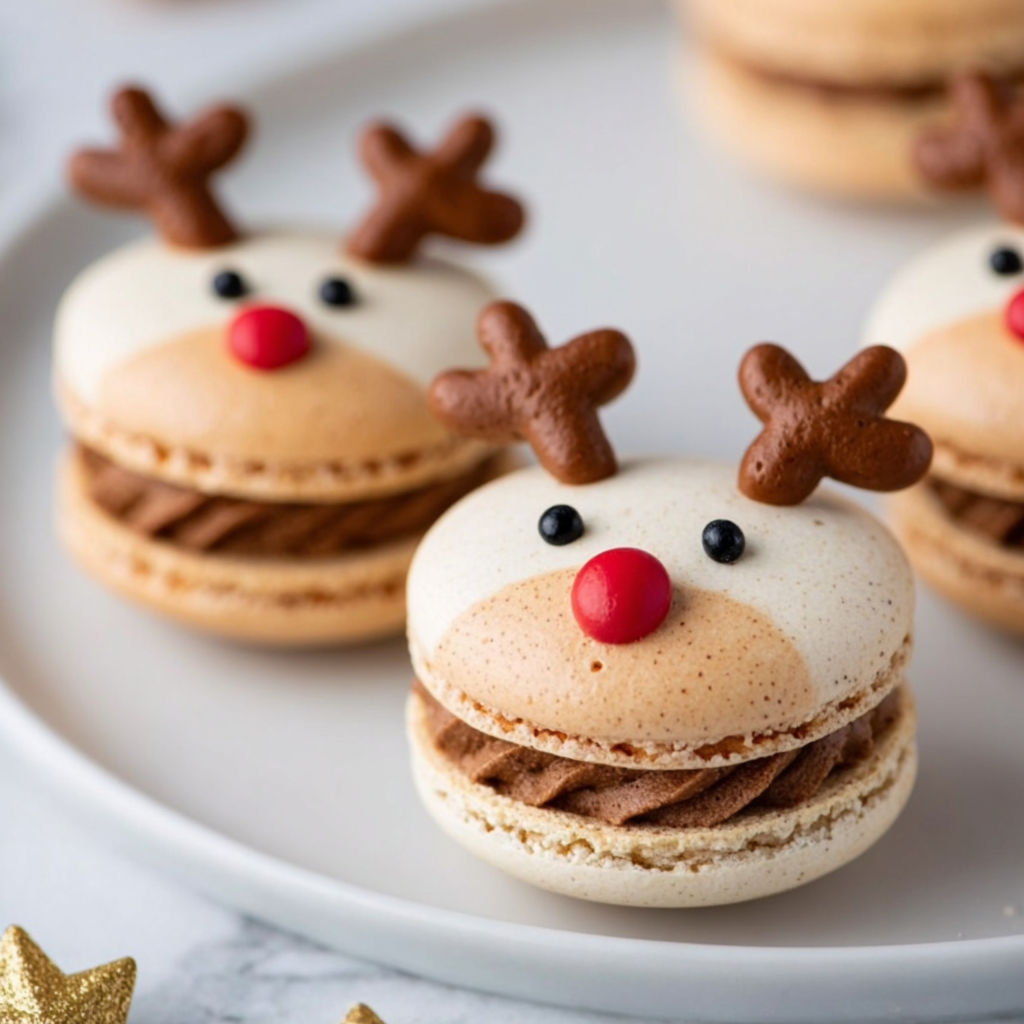
Pipe 1.5-inch circles onto a silicon mat. Immediately after piping, take your mini pretzels and gently press them into the top sides of the wet batter to form antlers.
Step 5: The “Dry” and Bake
Let the shells sit until they are no longer sticky to the touch. Bake at 300°F (150°C) for 12–14 minutes. Let cool completely before peeling them off the mat.
Step 6: The “Face” Decoration
Pipe two dots of white icing for eyes and a red dot for the nose. Use a dark chocolate ganache (1:1 ratio of heavy cream to chocolate) to sandwich two shells together.
Common Mistakes to Avoid
- Oily Almond Flour: If you over-process your almond flour, it releases oils that will cause “blotchy” shells. Pulse gently and sift.
- Incomplete Drying: If you bake the macarons while the surface is still wet, the steam will burst through the top, causing cracks instead of feet.
- Hollow Shells: This usually happens if the oven temperature is too low or if you over-whip the meringue, trapping too much air that eventually collapses.
3 Modern Variations for 2026
| Style | The “Flavor” Twist | Decoration |
| Spiced Cocoa | Add 21 tsp Cinnamon to shells | Gives a Mexican Hot Chocolate vibe. |
| Salted Caramel | Fill with Salted Caramel Ganache | Complements the salty pretzel antlers. |
| White Reindeer | Skip cocoa; use white food gel | Creates an “Arctic Reindeer” look. |
Export to Sheets
Would you like me to help you troubleshoot your oven’s “Hot Spots” to ensure your macarons rise evenly every time?