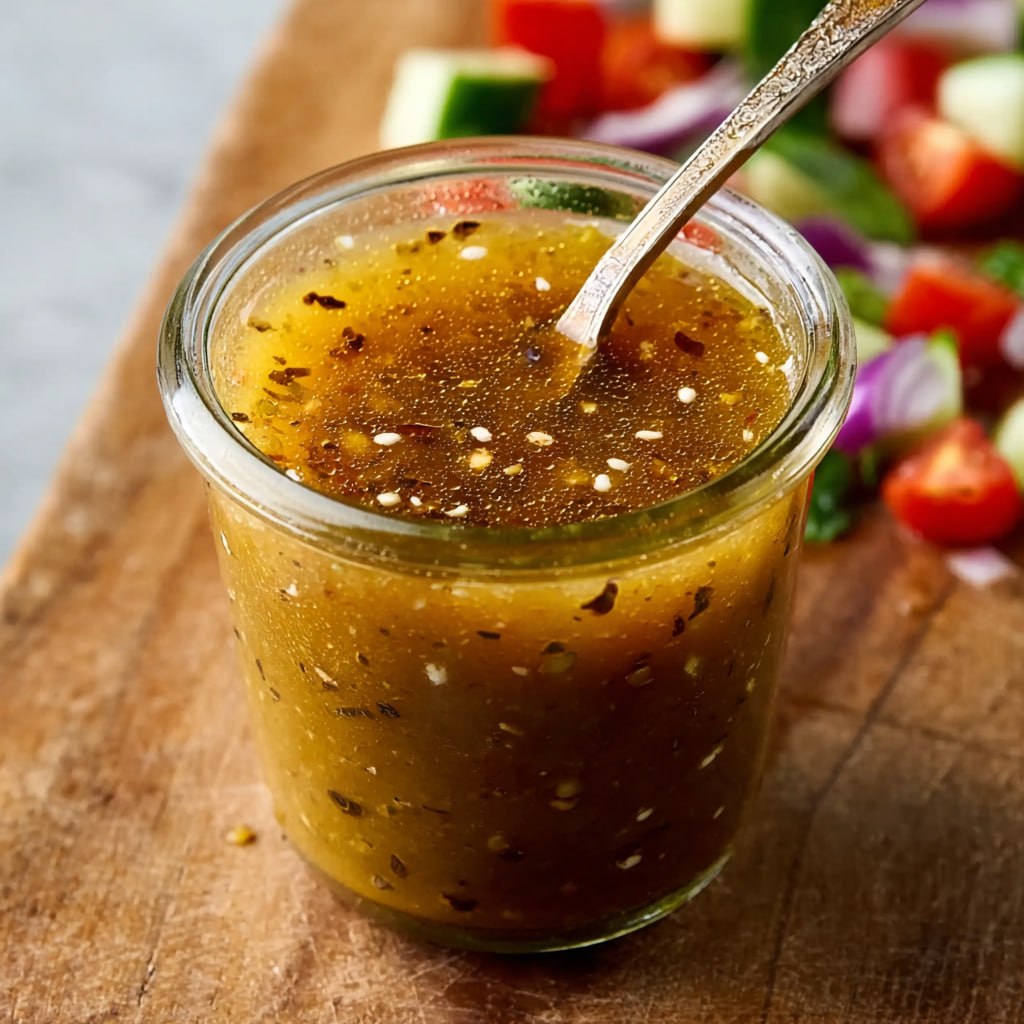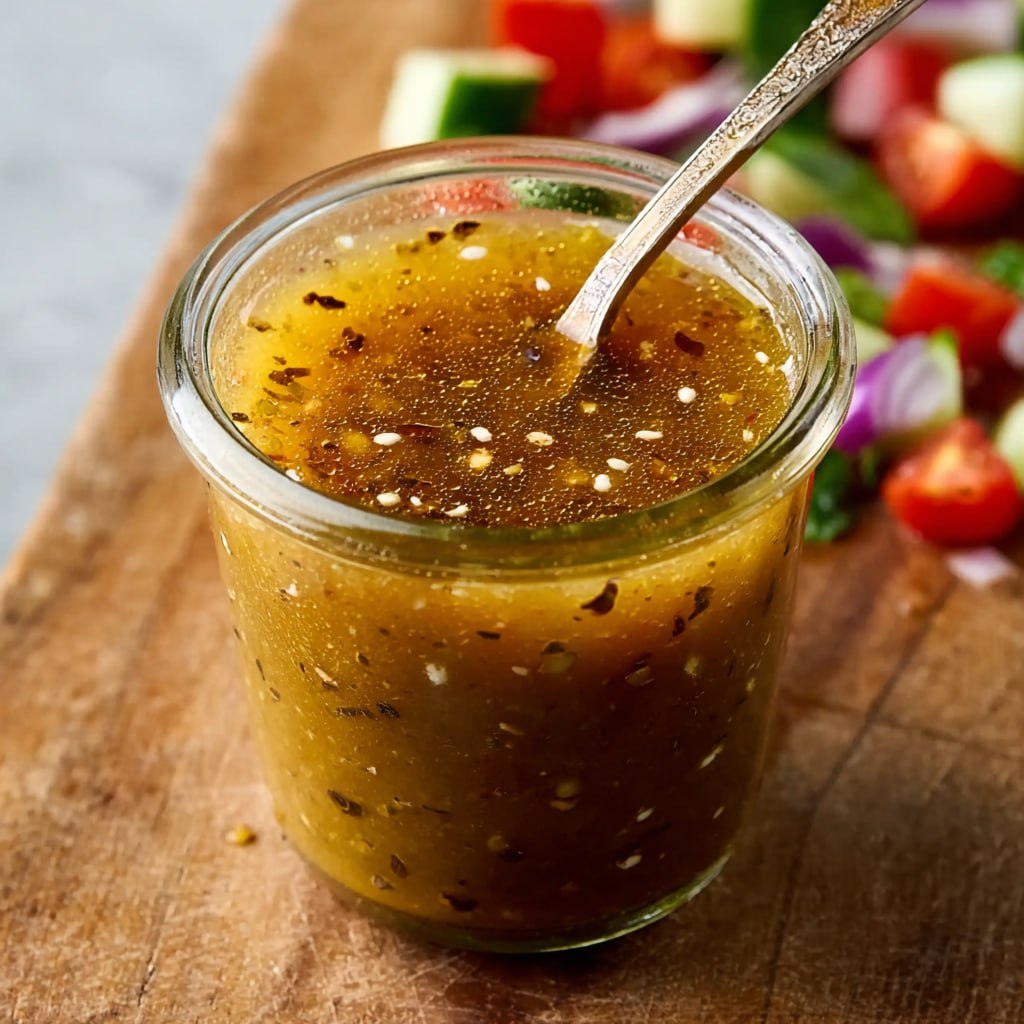
How to Make Greek Salad Dressing
Learning how to make Greek salad dressing from scratch takes exactly 5 minutes and uses pantry staples you probably already have. The result is tangy, herby, and loaded with Mediterranean flavor — miles better than anything that comes in a bottle.
Use it on Greek salad, as a chicken marinade, drizzled over roasted veggies, or stirred into grain bowls. Make a big jar on Sunday and it keeps all week.
Step-by-Step Instructions
Step 1: Gather Your Ingredients
Mince the garlic and juice the lemon. Have a mason jar or small bowl ready. That’s the entire prep — this dressing takes almost no work.
Step 2: Combine Everything
Add all the ingredients to a mason jar: olive oil, red wine vinegar, lemon juice, Dijon mustard, garlic, oregano, basil, salt, pepper, and the optional pinch of sugar. Seal the jar tightly.
Step 3: Shake
Shake vigorously for about 30 seconds. The Dijon mustard acts as an emulsifier and helps the oil and vinegar stay blended longer.
Step 4: Taste and Adjust
Pour a little onto a spoon and taste. Add more vinegar if you want it tangier, more oil if you want it milder, or more oregano for a stronger herb flavor. Adjust to your preference.
Step 5: Serve or Store
Use immediately, or seal and refrigerate for up to 2 weeks. Shake well before each use.
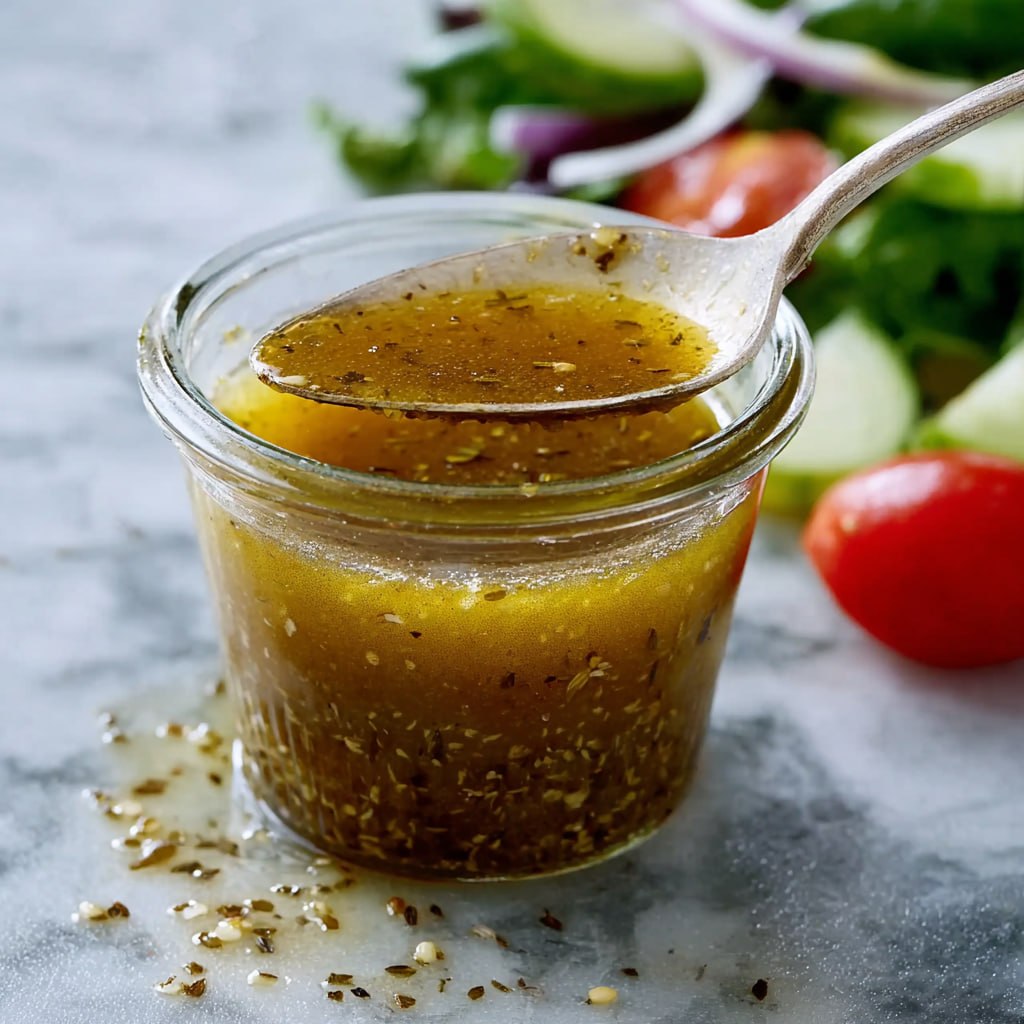
Ways to Use This Dressing
- Classic Greek salad — romaine, cucumber, tomato, red onion, Kalamata olives, and feta
- Chicken marinade — marinate for 30 minutes to 4 hours before grilling
- Grain bowls — drizzle over quinoa, farro, or couscous
- Roasted vegetables — toss before roasting or drizzle after
- Dipping sauce — serve with warm pita and raw vegetables
Tips for the Best Greek Dressing
- Use fresh lemon juice — bottled lemon doesn’t have the same brightness
- The Dijon mustard is key — it emulsifies the dressing and adds depth
- Let the dressing rest 10 minutes before using so the flavors meld
- It tastes even better the next day as the garlic infuses further
Frequently Asked Questions
Why does Greek dressing taste different from Italian?
Greek dressing uses red wine vinegar + lemon juice together, which creates a brighter, more citrusy flavor. The heavy oregano is also characteristic. Italian dressing typically uses only vinegar (no lemon) and has a wider herb blend without as much oregano.
How long does homemade Greek dressing last?
Up to 2 weeks in the refrigerator in a sealed jar. The olive oil may solidify when cold — just let it sit at room temperature for 5 minutes before shaking and using.
Can I use garlic powder instead of fresh garlic?
Yes. Use ½ teaspoon of garlic powder in place of one fresh clove. Garlic powder gives a milder, more uniform flavor while fresh garlic is sharper and more pungent.
Is this dressing gluten-free?
Yes, all the ingredients in this recipe are naturally gluten-free. Just double-check your Dijon mustard label — most are GF, but it’s worth confirming if you’re celiac.