Follow Me On Social Media!
Flaky Rosemary Parmesan Biscuits: The Ultimate Savory Bake

Introduction
While the baking world is often dominated by sugar and chocolate, data shows a shifting trend: searches for “savory baking recipes” have climbed by 35% in the last two years. We are collectively realizing that the comfort of a warm bake shouldn’t be limited to dessert.
Enter the Flaky Rosemary Parmesan Biscuit. This isn’t your average dinner roll. It is a study in texture: the shattering crispness of the outer crust, the tender, pillowy interior, and the intense umami punch of aged Parmesan combined with the piney, aromatic oil of fresh rosemary. By using the “lamination” technique (simple folding), we create physical layers of butter and dough that puff up in the oven, creating a structure that rivals a croissant but takes a fraction of the time. In this guide, we will explore the science of cold butter, why “grating” your fat is a game-changer, and how to achieve that golden, café-style rise.
Ingredients List
For a recipe with so few ingredients, quality is the primary variable for success.
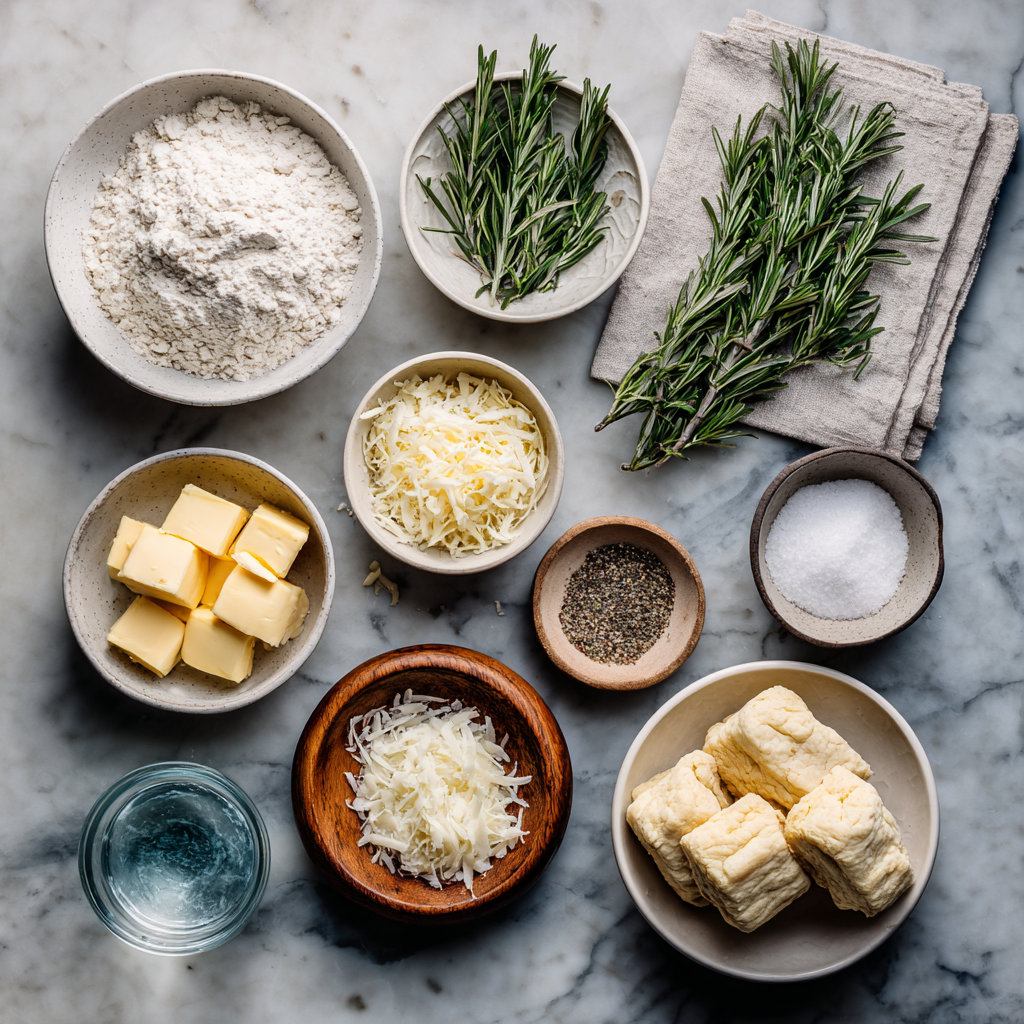
- All-Purpose Flour (2 cups / 250g):
- The Structure: Standard AP flour provides the perfect gluten network—enough to hold the rise, but not so much that the biscuit becomes chewy like bread.
- Unsalted Butter (½ cup / 1 stick / 113g):
- The Secret: It must be frozen or extremely cold. We will grate this into the flour to ensure even distribution without melting.
- Parmesan Cheese (1 cup, freshly grated):
- The Flavor: Use authentic Parmigiano Reggiano if possible. Pre-shredded cheese in bags is coated in cellulose (anti-caking agent), which prevents it from melting into the dough properly.
- Fresh Rosemary (2 tbsp, chopped):
- Aromatic Profile: Fresh is superior to dried here, as the moisture in the leaves helps release the essential oils during the bake.
- Baking Powder (1 tbsp): The chemical leavening agent responsible for the lift.
- Buttermilk (¾ cup + 2 tbsp):
- Chemistry: The acidity in buttermilk reacts with the baking powder and tenderizes the gluten, resulting in a softer crumb.
Timing
These biscuits are designed for speed, making them perfect for last-minute dinner parties or Sunday mornings.
- Prep Time: 15 minutes
- Cook Time: 15–18 minutes
- Total Time: ~35 minutes
- Efficiency Stat: Unlike yeast rolls which require 2+ hours of rising time, these chemical-leavened biscuits go from bowl to oven in under 20 minutes.
Step-by-Step Instructions
Step 1: The Dry Mix (H3)
Preheat your oven to 400°F (200°C) and line a baking sheet with parchment paper. In a large bowl, whisk together the flour, baking powder, salt, garlic powder, black pepper, and chopped rosemary.
- Why: Whisking aerates the flour and ensures the leavening agent is evenly distributed, preventing “metallic” tasting hot spots.
Step 2: The Butter Grate (H3)
Take your frozen stick of butter and grate it using the large holes of a box grater directly into the flour mixture. Toss gently with a fork or your fingers to coat the butter shards in flour.
- Science Check: Grating creates uniform, thin ribbons of fat. When these melt in the oven, they release steam, creating distinct flaky layers (pockets) within the dough.
Step 3: The Cheese Integration (H3)
Add the grated Parmesan and toss again.
- Tip: Reserving a tablespoon of cheese to sprinkle on top later creates a lovely toasted crust.
Step 4: The Bind (H3)
Pour in the cold buttermilk. Stir gently with a wooden spoon or spatula just until a shaggy dough forms.
- The Golden Rule: Stop mixing as soon as the flour disappears. Overmixing develops gluten, turning your flaky biscuit into a tough hockey puck.
Step 5: The Faux-Lamination (H3)
Turn the dough onto a lightly floured surface. It will look messy; that is okay.
- Pat the dough into a rough rectangle.
- Fold the dough in half (like a letter).
- Rotate 90 degrees and flatten gently again.
- Repeat this fold 3–4 times.
- Why: This stacking process aligns the butter and gluten layers horizontally, forcing the biscuit to rise up rather than spread out.
Step 6: Cut and Bake (H3)
Pat the dough to a 1-inch thickness. Use a sharp biscuit cutter (or a knife for squares) to cut the dough. Press straight down—do not twist the cutter (twisting seals the edges and inhibits rising). Place on the baking sheet, arranging them so they are just touching (this helps them support each other as they rise). Brush tops with a little extra buttermilk and sprinkle with the reserved cheese. Bake for 15–18 minutes until golden brown.
Nutritional Information
A savory indulgence that packs a protein punch thanks to the cheese.
Per Biscuit (Yields ~8):
- Calories: ~230 kcal
- Total Fat: 14g
- Saturated Fat: 9g
- Carbohydrates: 20g
- Protein: 7g
- Calcium: 15% DV
Data Insight: While high in saturated fat from the butter, the Parmesan provides a significant amount of umami, meaning you feel satisfied with a smaller portion compared to plain white bread.
Healthier Alternatives for the Recipe
You can adjust the recipe to fit different nutritional needs while keeping the core flavor profile.
- Whole Wheat: Swap 50% of the AP flour for White Whole Wheat Flour. It adds fiber and a nuttiness that pairs well with the rosemary.
- Lower Fat: Replace the butter with frozen grated Coconut Oil (refined, so it doesn’t taste like coconut). It mimics the solid fat structure of butter.
- Greek Yogurt Hack: Substitute the buttermilk with a mix of plain Greek yogurt and milk (1:1 ratio). This boosts the protein content significantly.
- Gluten-Free: Use a high-quality 1:1 GF Baking Flour (like King Arthur or Bob’s Red Mill). Biscuits are very forgiving for GF baking because they don’t rely on elasticity as much as bread does.
Serving Suggestions
These biscuits are incredibly versatile.
- The Breakfast Sandwich: Slice open while warm, add a fried egg and a slice of prosciutto for a high-end breakfast sandwich.
- Soup Companion: Serve alongside a bowl of tomato soup or minestrone. The rosemary notes bridge the gap between the bread and the herbs in the soup.
- Cheese Board: Cut the dough smaller to make “mini biscuits” and serve them on a charcuterie board as a vehicle for jams and soft cheeses (like Brie).
- Honey Drizzle: Serve warm with a drizzle of hot honey. The sweet-heat combo with the savory cheese is addictive.
Common Mistakes to Avoid
Here is why biscuits often turn out heavy or flat.
- Warm Ingredients:
- Mistake: Letting the butter sit out or using room-temp buttermilk.
- Result: The butter incorporates into the flour (like a cookie dough) rather than staying distinct. You lose the flakes.
- Fix: Keep everything in the fridge until the very last second.
- The “Twist”:
- Mistake: Twisting the biscuit cutter when pressing down.
- Result: You seal the layers of dough together on the sides, preventing them from puffing up.
- Fix: Press straight down and pull straight up.
- Overworking:
- Mistake: Kneading the dough like pizza dough.
- Result: Tough, chewy biscuits.
- Fix: Handle the dough as little as possible. Lumps are good.
Storing Tips for the Recipe
Freshness is key, but these store surprisingly well.
- Room Temperature: Store in an airtight container for 2 days.
- Reheating: To restore the crisp exterior, toast them in a toaster oven or air fryer for 2–3 minutes. Microwaving makes them rubbery.
- Freezing (Raw): This is the best method. Cut the biscuits, freeze them on a tray until solid, then bag them. Bake straight from frozen (add 5 minutes to cook time).
- Freezing (Baked): Wrap individually in foil and freeze for up to 3 months. Thaw at room temperature.
Conclusion
The Flaky Rosemary Parmesan Biscuit is a testament to the magic of simple baking physics. By respecting the temperature of your butter and the technique of the fold, you transform humble ingredients into a bakery-worthy side dish. They are fragrant, comforting, and impressively tall.
Ready to bake? Preheat that oven and grab your grater! If you try this recipe, please leave a comment below on how they turned out, and subscribe for more savory baking science.
FAQs
1. Can I use dried rosemary? Yes, but dried herbs are more potent. Use 1 teaspoon of dried rosemary instead of 2 tablespoons of fresh. Crush it between your fingers before adding to release the oils.
2. I don’t have buttermilk. What can I use? Make a “sour milk” substitute: Add 1 tablespoon of lemon juice or white vinegar to a measuring cup, then fill to the ¾ cup line with regular milk. Let it sit for 5 minutes until it curdles. It works perfectly.
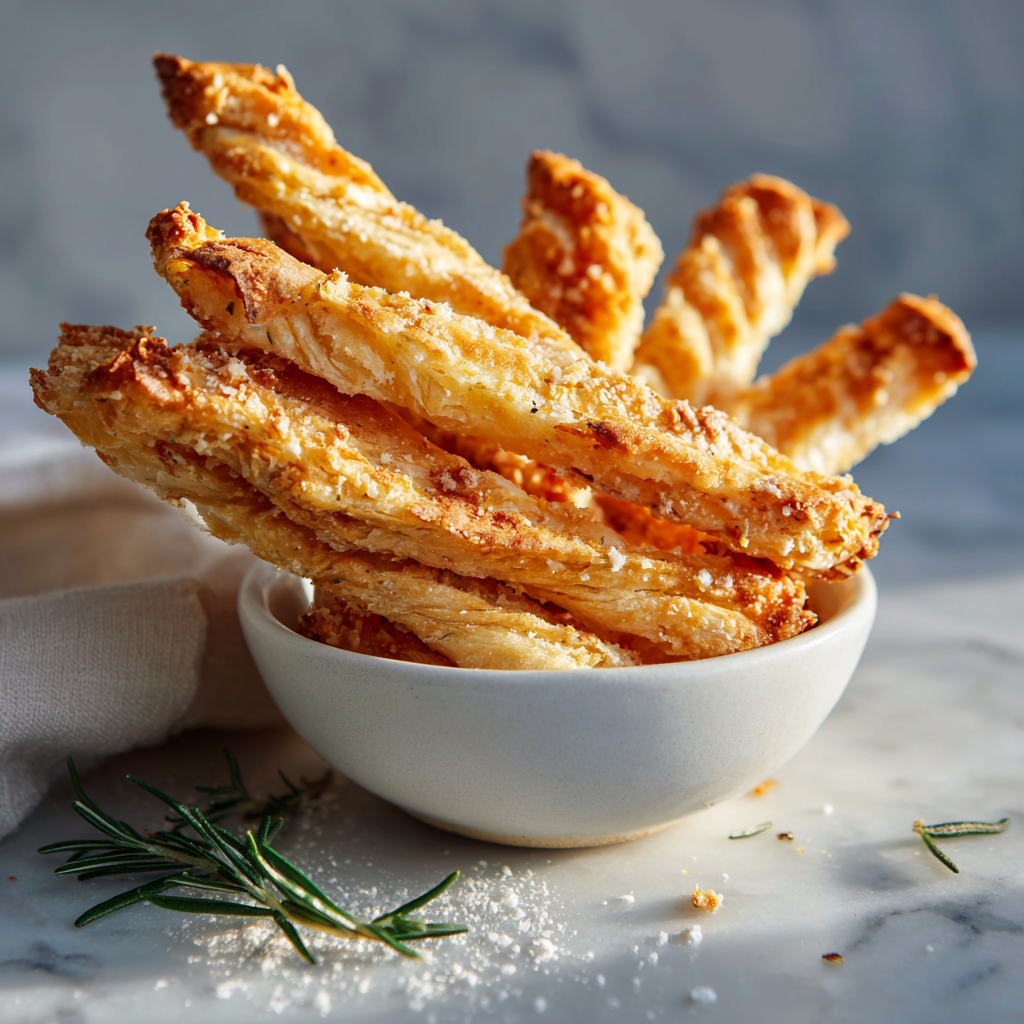
3. Can I make these into “Cheese Straws”? Absolutely. Instead of cutting circles, roll the dough into a rectangle and slice it into long, thin strips (1 inch by 4 inches). Twist them slightly and bake. They will be crispier and great for dipping.
4. Why did my biscuits fall over? This usually happens if the oven wasn’t hot enough (needs the initial thermal shock to set the structure) or if the flour distribution was uneven. Also, ensure you arrange them touching each other on the pan; they help support each other as they rise.