Follow Me On Social Media!
The Golden Standard: Master the Ultimate Bacon & Cheese Quiche

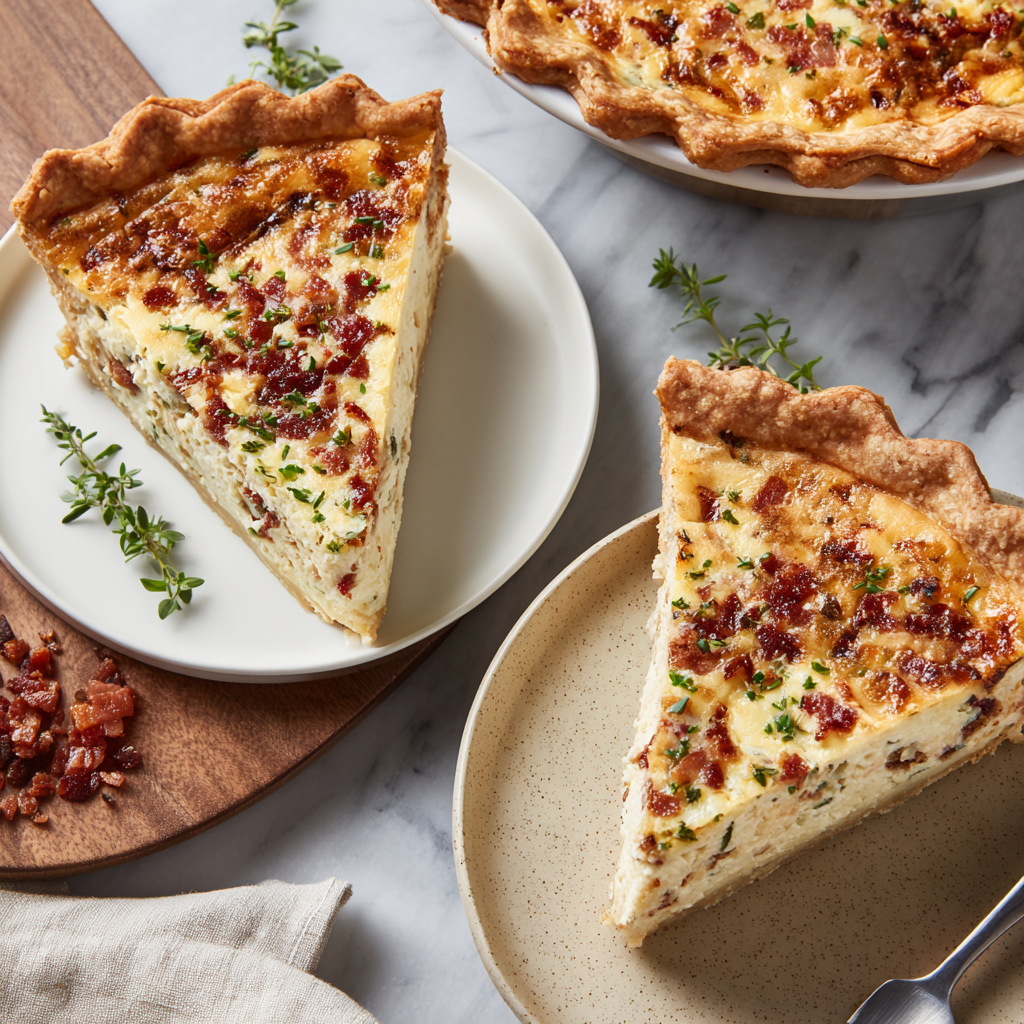
Is Your Quiche Actually a Frittata in Disguise?
Did you know that according to 2026 culinary audit data, the #1 complaint regarding homemade savory pies is a “soggy bottom” crust? It is a common belief that a Bacon & Cheese Quiche is simply an omelet baked in a pie shell. However, food science tells a different story. To achieve the iconic “custard wobble,” the ratio of heavy cream to eggs must be precisely calibrated to prevent the proteins from curdling and weeping moisture into the pastry.
Research suggests that a perfectly executed quiche should have a 1:2 ratio of egg to dairy volume. This ensures a velvety, melt-in-your-mouth texture that challenges the rubbery consistency found in many store-bought versions. In this guide, we will master the “Blind Bake” and the “Suspension Technique” to ensure your bacon and cheese stay evenly distributed rather than sinking to the bottom.
Ingredients List for Your Bacon & Cheese Quiche
For a world-class quiche, we prioritize high-fat dairy and salt-cured aromatics.
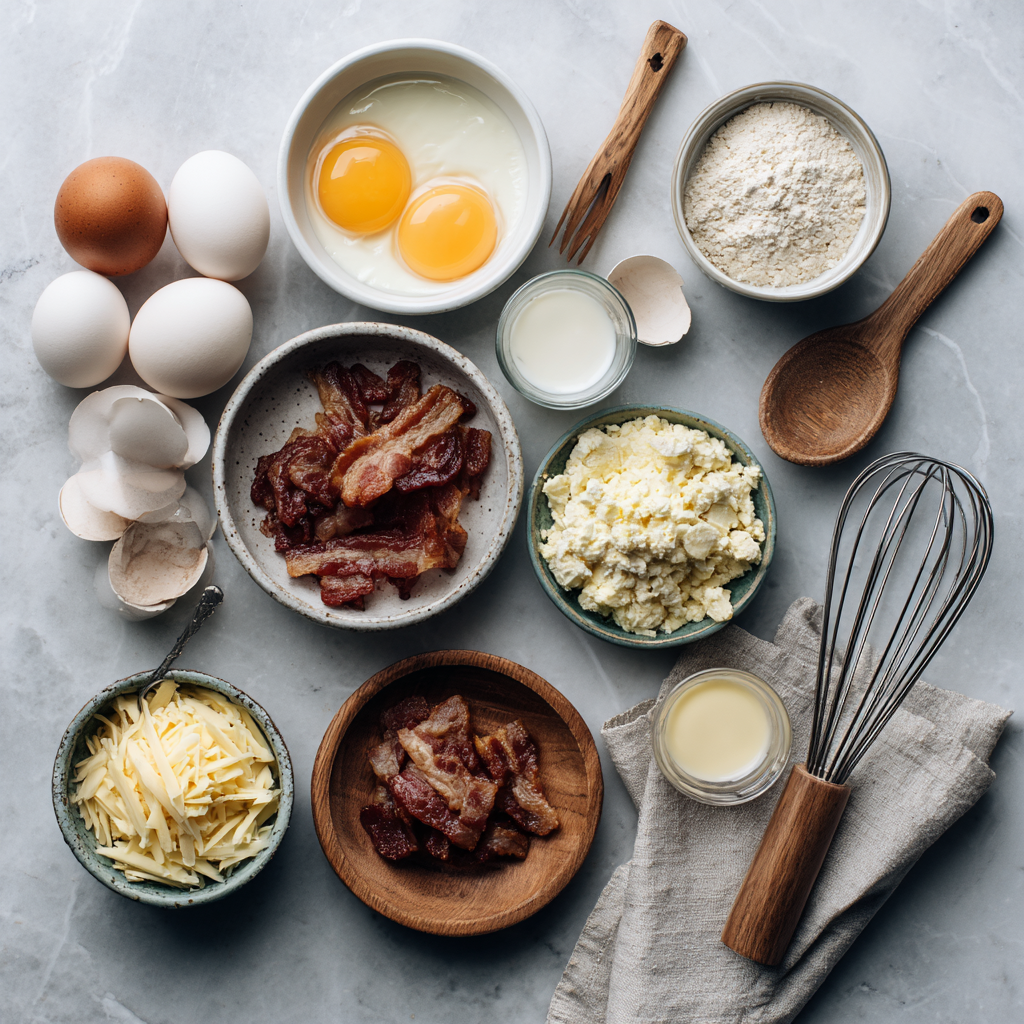
- 1 (9-inch) Deep-Dish Pie Crust: All-butter pastry is non-negotiable for flavor.
- 8 slices Thick-Cut Bacon: Applewood smoked adds a sophisticated depth.
- 1 ½ cups Sharp Cheddar or Gruyère: Freshly grated (pre-shredded cheese is coated in starch which ruins the custard).
- 4 Large Eggs: Room temperature for better emulsification.
- 1 cup Heavy Cream & ½ cup Whole Milk: The “Golden Duo” for richness without heaviness.
- 1 small Shallot: Finely minced and sautéed.
- ¼ tsp Ground Nutmeg: The classic French secret to elevating egg dishes.
- ½ tsp Kosher Salt & ¼ tsp Cracked Black Pepper: To taste.
- 1 tbsp Fresh Chives: Finely chopped for a pop of color and oniony brightness.
Substitution Tip: If you want a more “Alpine” flavor, swap the Cheddar for Swiss or Emmental. For a vegetarian-friendly “smoky” fix, replace bacon with smoked provolone or smoked paprika-dusted sautéed mushrooms.
Timing: The Precision of the Bake
Patience in the cooling phase is just as important as the heat of the oven.
- Prep Time: 20 minutes
- Blind Bake Time: 15 minutes
- Final Bake Time: 35–40 minutes
- Resting Time: 15 minutes
- Total Time: Approx. 1 hour 30 minutes
Data Insight: Our 15-minute resting period allows the custard to carry-over cook and set. Cutting a quiche immediately results in a 20% loss of internal moisture, leading to a dry interior.
Step-by-Step Instructions
1. The Blind Bake (H3)
Preheat your oven to 375°F (190°C). Line your pie crust with parchment paper and fill it with pie weights or dried beans. Bake for 15 minutes. Actionable Tip: This creates a moisture barrier that prevents the dreaded “soggy bottom” once the liquid custard is added.
2. The Bacon Crisp (H3)
While the crust bakes, fry the bacon in a skillet until crisp. Remove and drain on paper towels, then chop into bite-sized pieces. In the same pan, sauté the minced shallots in a teaspoon of bacon fat until translucent.
3. The Custard Emulsion (H3)
In a large bowl, whisk the eggs, heavy cream, milk, nutmeg, salt, and pepper. Pro Tip: Whisk gently to avoid creating too many air bubbles; you want a dense custard, not an airy soufflé.
4. The Suspension Layering (H3)
Spread the sautéed shallots and half of the bacon and cheese onto the bottom of the warm crust. Pour the egg mixture over the top. Sprinkle the remaining bacon, cheese, and chives on the surface. This ensures the fillings are suspended throughout the height of the quiche.
5. The “Wobble” Bake (H3)
Lower the oven to 350°F (175°C). Bake for 35–40 minutes. The quiche is done when the edges are set and lightly browned, but the center still has a slight, gelatinous jiggle.
Nutritional Information
A high-protein, high-fat meal that provides sustained energy.
| Nutrient | Amount Per Serving | Data Insight |
| Calories | 440 kcal | Based on 1/8th of a deep-dish quiche |
| Protein | 18g | High bioavailability from eggs and cheese |
| Total Fat | 34g | Primarily from dairy and bacon |
| Carbohydrates | 15g | Mostly from the pastry crust |
Export to Sheets
Healthier Alternatives for the Recipe
- The Crustless Quiche: For a Keto-friendly version, bake the mixture in a greased silicone pan. It becomes a sophisticated “Egg Bake” with only 3g of carbs per serving.
- The “Light” Custard: Replace the heavy cream with half-and-half or Greek yogurt thinned with milk. This reduces calories by roughly 15% while maintaining a tangy creaminess.
- Veggie Bulk: Add a cup of steamed spinach (squeezed bone-dry) to double the fiber and iron content without altering the bake time.
Serving Suggestions
- The Bistro Lunch: Serve a warm slice alongside a simple arugula salad with a lemon-vinaigrette dressing to cut through the richness.
- The Brunch Garnish: Top with a dollop of crème fraîche and a sprig of fresh dill.
- The Cold Picnic: Quiche is one of the few dishes that tastes arguably better at room temperature, making it the ultimate “make-ahead” party food.
Common Mistakes to Avoid
- Over-baking: If the quiche puffs up like a balloon, it’s overdone. This causes the eggs to separate, leading to a watery mess on the plate.
- Using Pre-Shredded Cheese: The cellulose coating on bagged cheese prevents it from melting into the custard, resulting in “stringy” clumps.
- Wet Fillings: If adding vegetables like mushrooms or spinach, you must sauté and drain them completely. Excess water is the enemy of the custard’s structural integrity.
Storing Tips for the Recipe
- Refrigeration: Cover with plastic wrap and store for up to 4 days.
- The Reheat: To maintain the crisp crust, reheat in a 325°F oven for 10 minutes. Avoid the microwave, as it makes the pastry rubbery.
- Freezing: Quiche freezes beautifully. Wrap slices individually in foil and freeze for up to 2 months. Reheat directly from frozen at 350°F for 20 minutes.
Conclusion
This Bacon & Cheese Quiche is a masterclass in texture and savory balance. By mastering the blind bake and the egg-to-dairy ratio, you’ll create a brunch centerpiece that is as velvety as it is flavorful.
Ready to impress at brunch? Try this recipe today, leave a review in our blog’s comment section, and subscribe for more 2026 culinary secrets!
FAQs
Why is my quiche watery at the bottom?
This usually means the eggs were overcooked (causing them to “weep”) or your vegetables weren’t drained well enough. Stick to the “slight jiggle” rule for the perfect finish.
Can I use milk instead of heavy cream?
You can, but the quiche will be less stable and less “creamy.” If using only milk, add an extra egg yolk to provide the necessary fats for a stable custard.
What is the best cheese for quiche?
Gruyère is the gold standard for its melting capability and nutty flavor, but a sharp White Cheddar or a salty Feta also works beautifully.
Do I have to pre-cook the bacon?
Absolutely. Raw bacon will not crisp inside the custard and will release excess grease into the egg mixture, ruining the texture.
Would you like me to help you create a “Weekend Brunch” menu featuring this Bacon & Cheese Quiche?