Follow Me On Social Media!
Easy Vegan Danish Butter Cookies: The “Shortbread” Emulsion

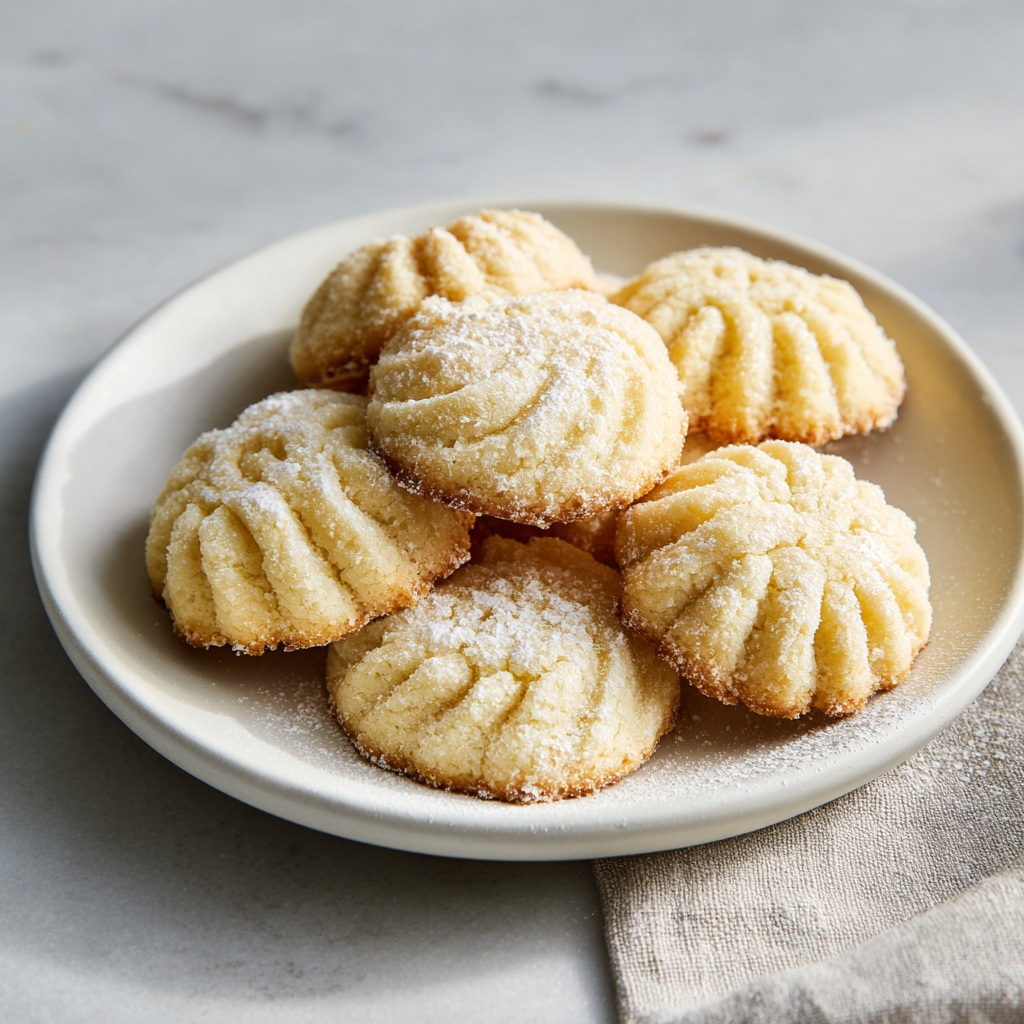
The Science of the “Vegan Snap”
Traditional Danish butter cookies (Vaniljekranse) rely on a high ratio of dairy fat to flour to create a delicate, sandy crumb. In the 2026 vegan adaptation, we focus on Lipid Solidification:
- The Butter Choice: To achieve the signature “snap,” you must use a vegan butter block (high in saturated fats like coconut or shea) rather than a tub margarine. These fats remain solid at room temperature, allowing the cookies to hold their intricate piped shapes without spreading into flat puddles.
- The Starch Buffer: By replacing a small portion of flour with cornstarch, we lower the overall protein content. This prevents the formation of a tough structure and ensures the cookie “shatters” upon the first bite, mimicking the texture of high-quality dairy butter.
Ingredients List
- The “Butter” Core:
- Vegan Butter Block (1 cup / 225g): Softened but still cool to the touch.
- The Dry Structure:
- All-Purpose Flour (2 cups).
- Cornstarch (41 cup): The “secret” for the sandy texture.
- Almond Flour (41 cup): For a rich, nutty depth.
- The Aromatics:
- Organic Cane Sugar or Powdered Sugar (43 cup).
- Vanilla Bean Paste (2 tsp): Using paste instead of extract provides those classic “black specks” and a more intense flavor.
- Dairy-Free Milk (1–2 tbsp): Only if the dough is too stiff to pipe.
Nutritional Information (Per Cookie)
Based on 24 cookies.
| Nutrient | Amount |
| Calories | 115 kcal |
| Total Fat | 8g |
| Net Carbohydrates | 10g |
| Protein | 1g |
Export to Sheets
Timing: The “Cool-Pipe” Method
- Prep: 15 minutes.
- Baking: 12–15 minutes.
- Cooling: 20 minutes.
Step-by-Step Instructions
Step 1: The Creaming Protocol
Cream the vegan butter and sugar for at least 3–5 minutes.
Actionable Advice: You are looking for a “pale and aerated” texture. Incorporating air at this stage is what makes the cookies light despite the lack of eggs.
Step 2: The Vanilla Infusion
Beat in the vanilla bean paste. If you don’t have paste, use a high-quality extract, but avoid “imitation” vanilla, as the flavor is the star of this simple cookie.
Step 3: The Dry Incorporation
Sift together the flour, cornstarch, and almond flour. Gradually fold into the butter mixture on low speed.
- Texture Check: If the dough feels like stiff clay, add a splash of almond or soy milk until it is “pipeable” but still holds a peak.
Step 4: The Star-Tip Pipe
Fit a piping bag with a large open-star tip (like Wilton 1M or 6B). Pipe the dough into circles (wreaths) or “S” shapes onto a parchment-lined baking sheet.
Step 5: The “Gold-Edge” Bake
Bake at 350°F (175°C) for 12–15 minutes.
- The Reveal: The cookies should be matte on top and only slightly golden on the very edges and bottom. They will feel soft when you take them out but will firm up into a crisp “snap” as they cool.
Common Mistakes to Avoid
- Over-Softening the Butter: If the vegan butter is oily or melted, the cookies will lose their beautiful piped ridges in the oven. It should be “pliable” but not “shiny.”
- Skipping the Sifting: Vegan butter can sometimes be “clumpy” with starches. Sifting your dry ingredients ensures a perfectly smooth, professional crumb.
- Hot Pans: Never pipe dough onto a warm baking sheet from a previous batch. The heat will melt the fats instantly, ruining the shape before they even hit the oven.
The 2026 Finishing Touch
Once cooled, dip half of the cookie into melted vegan white chocolate and sprinkle with coarse sanding sugar for that iconic “blue tin” aesthetic.
Would you like me to help you create a “Chocolate Dipping” guide with instructions on how to properly temper vegan chocolate for these cookies?