Follow Me On Social Media!
Gingerbread Crinkle Cookies: The “Surface-Tension” Bake

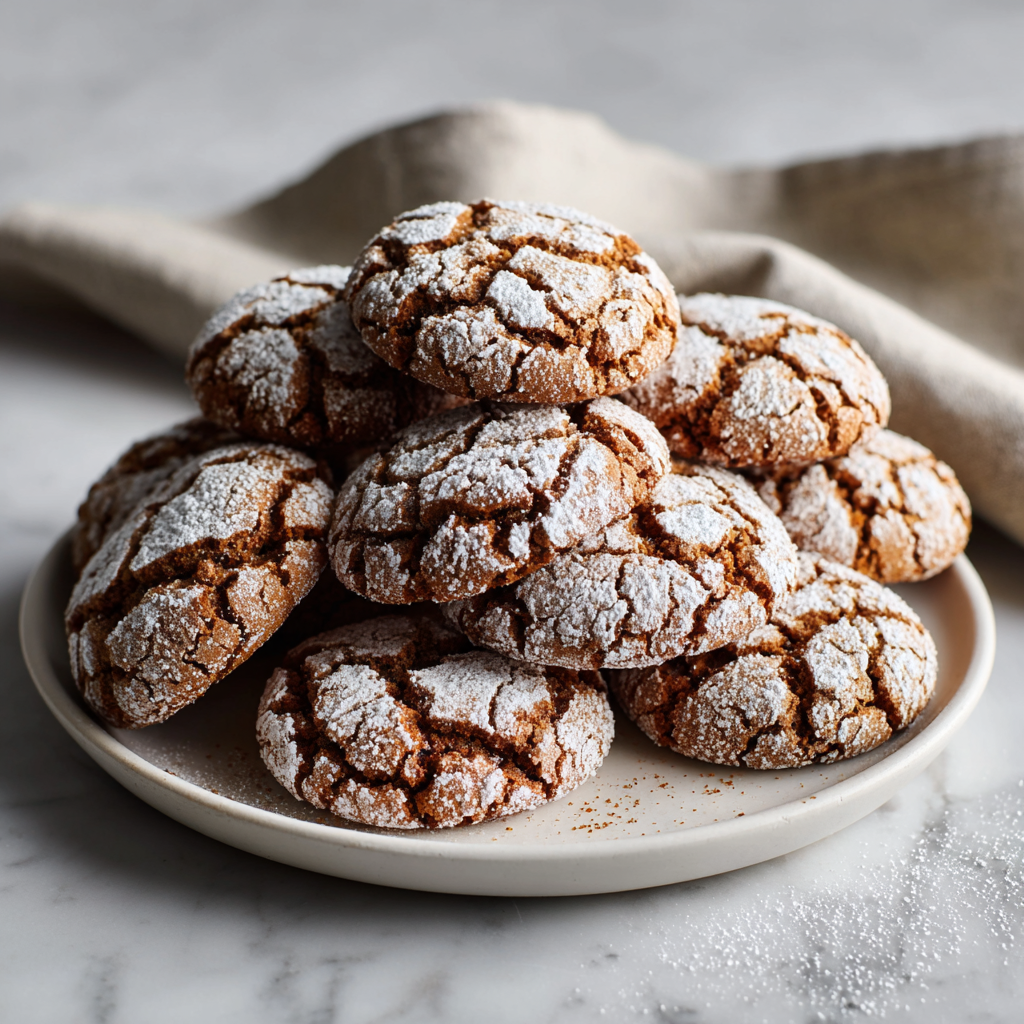
The Science of the “Crackle”
The iconic “crinkle” effect is a result of differential drying.
- The Sugar Barrier: By rolling the dough in granulated sugar first, and then a thick layer of powdered sugar, you create a moisture barrier.
- Thermal Expansion: As the cookies bake, the interior expands faster than the sugar-coated surface can stretch. The “cracks” reveal the dark, moist gingerbread underneath, creating the high-contrast aesthetic.
- The Molasses Factor: Molasses is hygroscopic, meaning it attracts moisture. This ensures the center remains fudgy and “brownie-like” while the exterior becomes crisp.
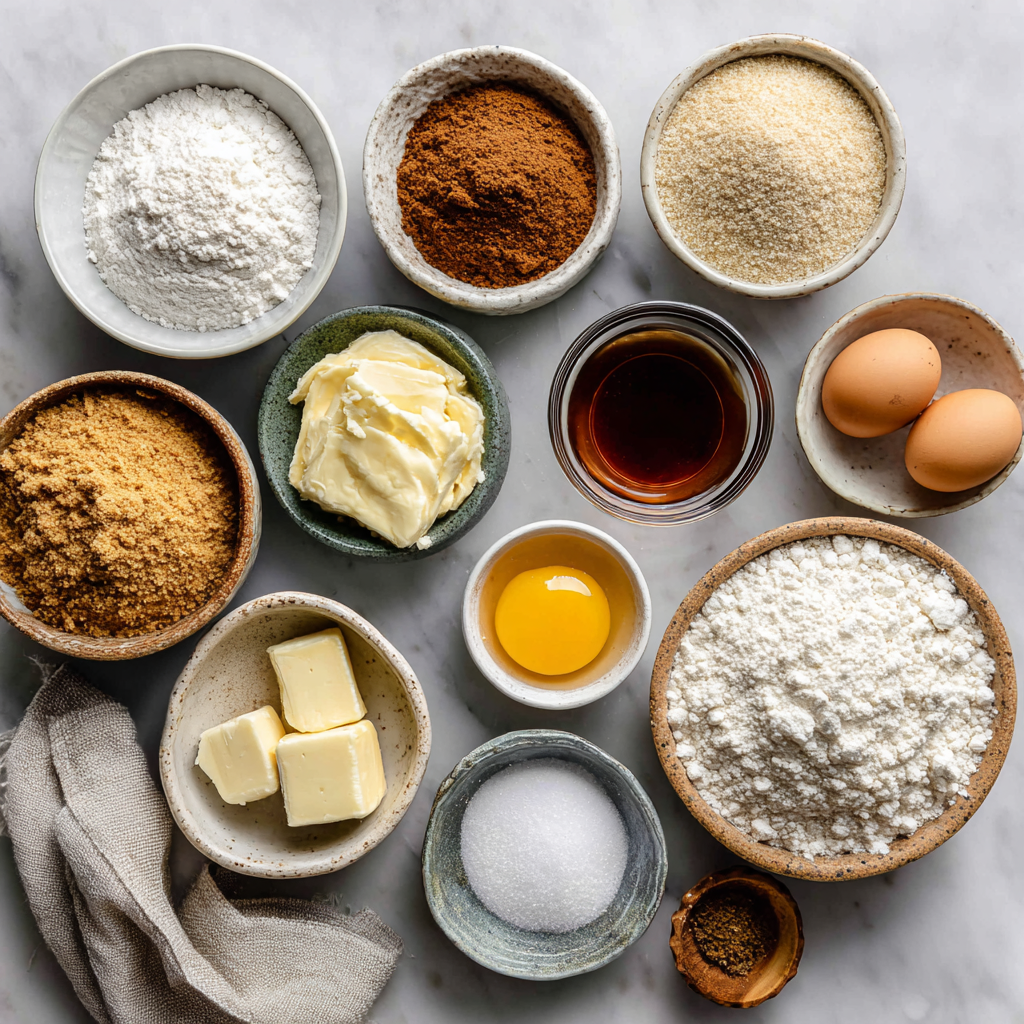
Ingredients List
- The Spice Core:
- All-Purpose Flour (2 ¼ cups).
- Ground Ginger (2 tsp): For the “zing.”
- Ground Cinnamon (1 tsp) & Cloves (41 tsp).
- Baking Soda (1 tsp): Vital for the “lift” that causes crinkling.
- The “Fudge” Components:
- Unsalted Butter (43 cup): Softened.
- Brown Sugar (1 cup): Packed.
- Molasses (41 cup): Use unsulphured (blackstrap is too bitter).
- Egg (1 large).
- The Coating Duo:
- Granulated Sugar (31 cup).
- Powdered Sugar (21 cup): Sifted.
Nutritional Information (Per Cookie)
Based on a yield of 24 cookies.
| Nutrient | Amount |
| Calories | 145 kcal |
| Total Fat | 6g |
| Net Carbohydrates | 22g |
| Protein | 2g |
Export to Sheets
Timing: The “Cold-Dough” Protocol
- Prep: 15 minutes.
- Chilling: 2 hours (Minimum) to Overnight.
- Baking: 10–12 minutes.
Step-by-Step Instructions
Step 1: The Creaming Method
Beat the softened butter and brown sugar until pale and fluffy. Add the egg and molasses, mixing until fully incorporated.
Step 2: The Dry Integration
Whisk the flour, baking soda, and spices together. Slowly add to the wet ingredients. The dough will be very soft and sticky.
Step 3: The Deep Chill
Wrap the dough in plastic and refrigerate for at least 2 hours.
Actionable Advice: Do not skip this. Warm dough will spread too fast in the oven, causing the powdered sugar to melt into the cookie instead of staying on top as a white crust.
Step 4: The “Double-Roll” Technique
- Scoop 1-inch balls of dough.
- Roll first in granulated sugar. (This provides the “grip” for the next layer).
- Roll generously in powdered sugar. You want a heavy, white coating.
Step 5: The High-Heat Bake
Place on a parchment-lined sheet. Bake at 350°F (175°C) for 10–12 minutes.
- The Sign of Success: The cookies should look “puffed” with distinct cracks. They will settle and sharpen their crinkles as they cool.
Common Mistakes to Avoid
- Using Old Baking Soda: If your baking soda is expired, the cookies won’t rise enough to “break” the sugar coating, resulting in a flat, grey cookie.
- Light-Handed Sugaring: If you can see the brown dough through the powdered sugar before baking, you haven’t used enough. It should look like a snowball.
- Over-baking: These cookies should be “set” on the edges but slightly soft in the cracks. Over-baking turns the fudgy center into a dry ginger snap.
3 Modern Variations for 2026
| Style | The “Twist” | Flavor Profile |
| The “Triple Ginger” | Add finely minced crystallized ginger. | High-intensity spice and chewy texture. |
| The “Chocolate-Ginger” | Replace 1/4 cup flour with Cocoa powder. | A rich, dark, “Black Forest” style gingerbread. |
| The “Orange-Zest” | Add 1 tbsp Orange Zest to the sugar. | Citrus brightens the deep molasses notes. |
Export to Sheets
Would you like me to help you create a “Spiced Eggnog Glaze” for drizzling over these once they cool?