Follow Me On Social Media!
Beetroot Cured Salmon: The Art of the “Rubied” Gravlax

Does the Beetroot Change the Flavor or Just the Aesthetic?
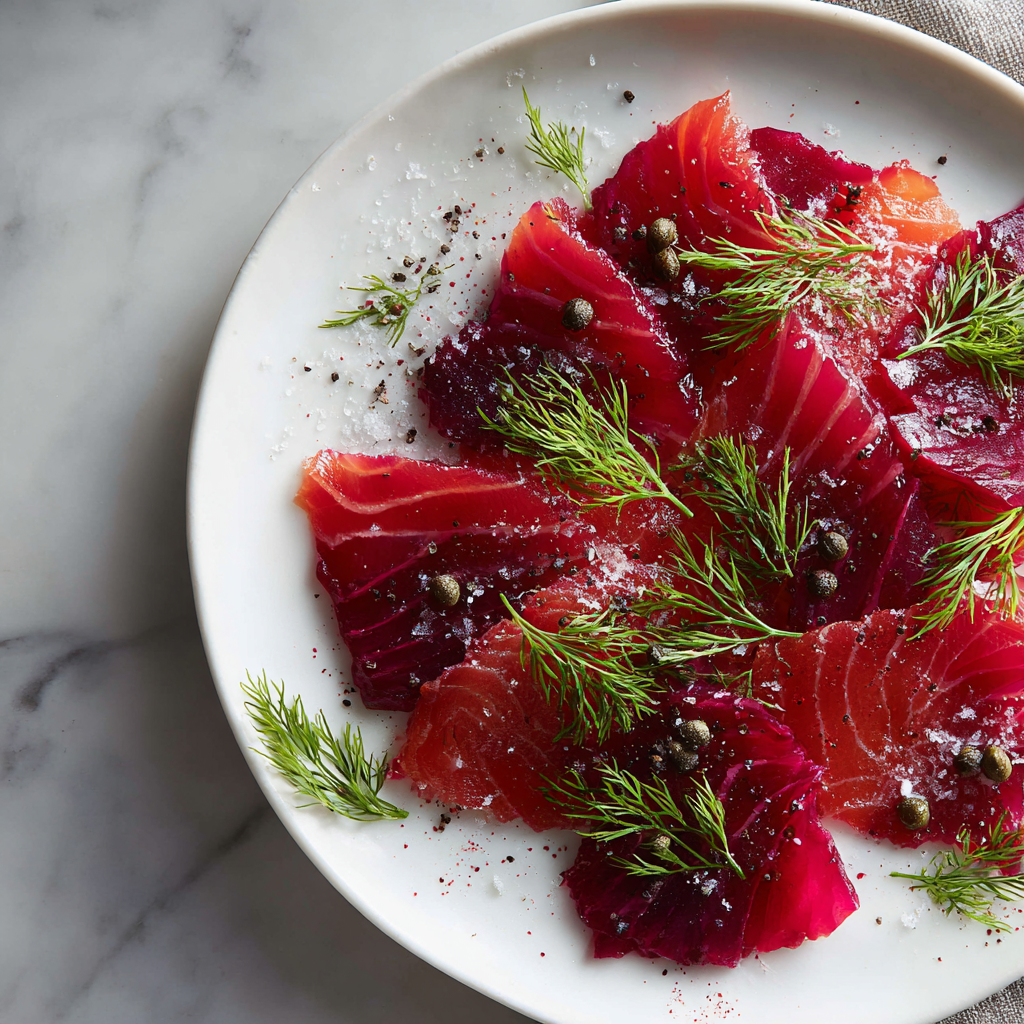
Did you know that curing salmon is an ancient preservation technique called Gravlax, which literally translates from Swedish as “grave salmon” (referring to the historic practice of burying the fish in the sand)? While traditional cures use salt and sugar, the addition of beetroot serves a dual purpose. Beyond the stunning, deep-magenta gradient it creates on the outer rim of the fish, the beetroot adds a subtle, earthy sweetness that balances the oily richness of the salmon. Scientifically, the salt draws out moisture (osmosis), firming the flesh while the beet pigments travel into the top layers of the protein.
Ingredients List
- The Protein:
- Fresh Salmon Fillet (1 lb): Sashimi-grade, skin-on.
- The “Ruby” Cure:
- Raw Beetroot (2 medium): Peeled and finely grated.
- Kosher Salt (21 cup): Use coarse salt; it draws moisture more effectively than table salt.
- Granulated Sugar (21 cup): For balance and texture.
- The Aromatics:
- Fresh Dill (1 large bunch): Roughly chopped.
- Lemon Zest (2 lemons).
- Horseradish (2 tbsp, grated): Adds a sharp “bite” to cut through the fat.
- Black Peppercorns (1 tbsp): Crushed.
Timing: The Chemistry of the Cure
Total time investment: 24 to 48 hours.
- Prep: 20 minutes.
- Curing Time: 24 hours (for a light cure) to 48 hours (for a deep, firm cure).
Step-by-Step Instructions
Step 1: The Grate and Mix
In a medium bowl, combine the grated beetroot, salt, sugar, lemon zest, horseradish, and crushed peppercorns. Mix until it looks like vibrant purple “sand.”
Step 2: The Bed of Herbs
Place a large piece of plastic wrap on a tray. Lay half of the fresh dill down, then place the salmon fillet (skin-side down) on top of the herbs.
Step 3: The Burial
Pack the beetroot mixture firmly onto the flesh side of the salmon, covering it completely so no pink fish is visible. Top with the remaining dill.
Actionable Advice: Wrap the salmon tightly in several layers of plastic wrap. Place it on a rimmed baking sheet (it will leak purple juice) and weight it down with a second tray and a couple of heavy cans. This pressure forces the cure into the fish.
Step 4: The Wait
Refrigerate for 24–48 hours. Turn the fish over every 12 hours to ensure the brine (the liquid that forms) distributes evenly.
Step 5: The Reveal
Unwrap the salmon and discard the cure.
- Critical Step: Quickly rinse the salmon under cold water to remove excess salt and beet fibers, then pat it bone-dry with paper towels.
- The Result: You will have a firm, translucent fillet with a spectacular neon-purple border.
Nutritional Information (Per 2 oz Serving)
- Calories: 110 kcal.
- Protein: 12g.
- Healthy Fats (Omega-3s): 6g.
- Sodium: High (due to the curing process; serve in thin slices).
- Vitamin B12: 45% of Daily Value.
Common Mistakes to Avoid
- Using Pre-Cooked Beets: You must use raw beetroot. Pre-cooked or pickled beets are too soft and won’t release the necessary enzymes or concentrated pigments for a proper cure.
- Rinsing Too Long: A quick rinse is fine, but don’t soak the fish. You want to keep the concentrated flavor on the surface.
- Slicing Thickly: Cured salmon should be sliced against the grain into paper-thin, translucent ribbons. Thick slices will feel overly salty and “rubbery.”
Serving Suggestions
- The Classic: On a toasted bagel with cream cheese, capers, and red onion.
- The Scandinavian: On rye bread with a “Mustard-Dill Sauce” (Hovma¨starsa˚s).
- The Modern: On a blini with a dollop of crème fraîche and a sprig of fresh dill.
Would you like me to help you create a recipe for a “Honey-Mustard Dill Sauce” to perfectly complement your cured salmon?