Follow Me On Social Media!
Salted Caramel Dark Chocolate Cookies: The Science of “Salty-Sweet”

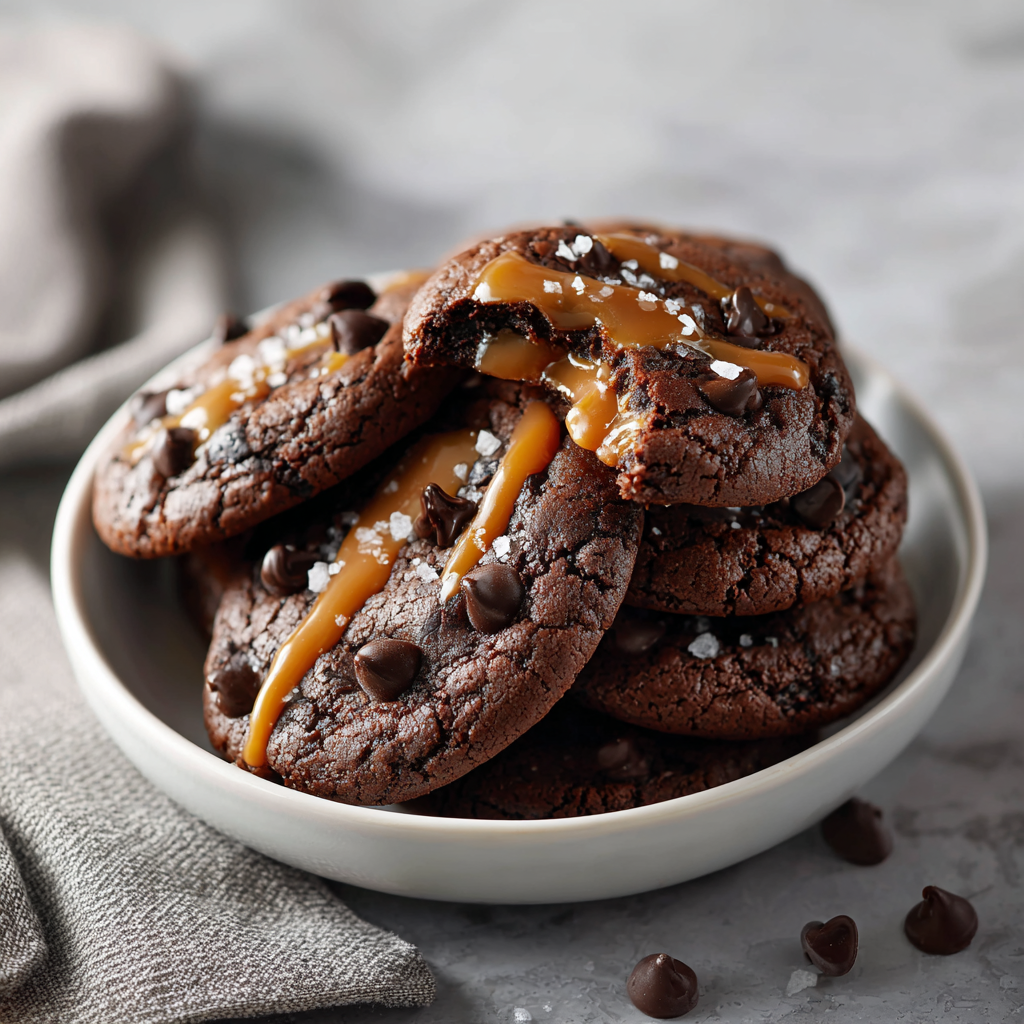
Why Does Salt Make Chocolate Taste More Like Chocolate?
Did you know that our tongues have a specific set of “sweetness receptors” (SGLT1) that only activate when sodium is present? This is the biological reason why salted caramel is so addictive: the salt doesn’t just contrast the sugar; it actually amplifies the perception of sweetness and the complexity of the cacao. To achieve a professional-grade cookie, we use the “Pan-Banging” technique to create rippled, crispy edges and a dense, fudgy center that houses a molten caramel core.
Ingredients List
- The Cookie Base:
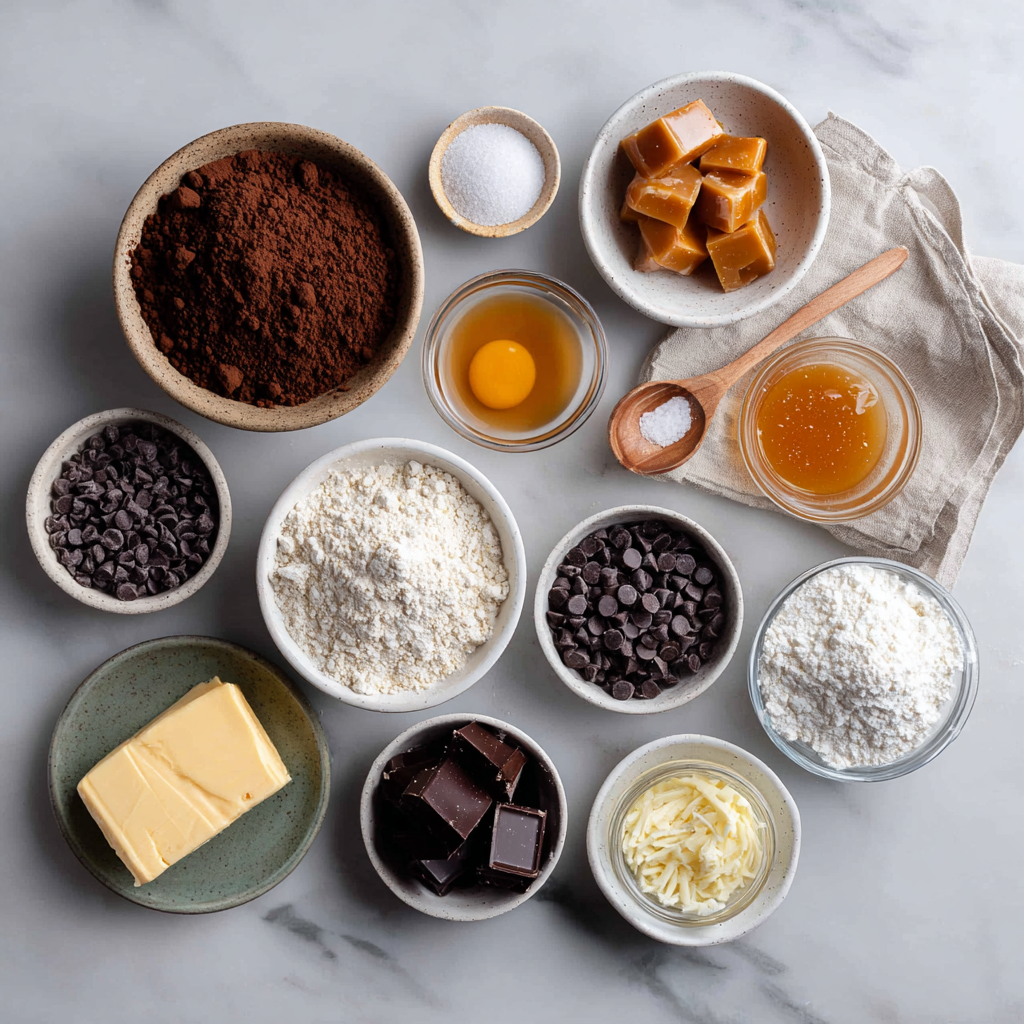
- All-Purpose Flour (241 cups): Sifted.
- Dark Cocoa Powder (21 cup): Use Dutch-processed for that “Oreo-black” depth.
- Unsalted Butter (1 cup): Browned (BeurreNoisette) for a nutty, toasted flavor.
- Sugars: 1 cup Dark Brown Sugar (packed) and 21 cup Granulated Sugar.
- Large Egg (1) + 1 Egg Yolk: The extra yolk provides a chewy, fudge-like texture.
- The “Guts”:
- Dark Chocolate Chunks (1 cup): At least 70% cacao.
- Soft Caramels (12–15): High-quality soft chewable squares.
- The Finish:
- Flaky Sea Salt (Maldon): For the essential electrolyte-sweetness boost.
Timing: Temperature Control is Key
Total time investment: 2 hours (includes essential chilling).
- Prep & Browning Butter: 15 minutes.
- Chilling Time: At least 1 hour (do not skip!).
- Bake Time: 10–12 minutes.
Step-by-Step Instructions
Step 1: The Brown Butter Foundation
Melt the butter in a saucepan over medium heat. Continue cooking, whisking constantly, until it foams and you see brown specks at the bottom.
Actionable Advice: The moment it smells like toasted hazelnuts, remove it from the heat. This adds a “toffee” dimension that regular creamed butter cannot provide.
Step 2: The Creaming Process
Whisk the cooled brown butter with both sugars. Add the egg, egg yolk, and vanilla. Mix until the batter looks glossy and slightly lightened in color.
Step 3: The Dry Fold
Fold in the flour, cocoa powder, and baking soda. Stir until no white streaks remain, then fold in the dark chocolate chunks.
Expert Insight: Use chocolate chunks rather than chips. Chunks create “pools” of chocolate, whereas chips are designed to hold their shape and remain waxy.
Step 4: The Caramel Stuffing
Take 2 tablespoons of dough and flatten it in your palm. Place a soft caramel in the center and wrap the dough around it, ensuring no caramel is visible.
Pro Tip: Chill the dough balls in the fridge for 1 hour. If you bake them while the butter is warm, the caramel will leak out and burn on the tray before the cookie sets.
Step 5: The Bake & Salt
Preheat your oven to 175°C (350°F). Bake for 10–12 minutes.
- The Pan-Bang: Halfway through baking, lift the pan 2 inches and drop it against the oven rack. This creates the signature ripples.
- The Finish: Immediately after removing from the oven, sprinkle a generous pinch of flaky sea salt over the molten centers.
Nutritional Information (Per Cookie)
- Calories: 240 kcal.
- Total Fat: 14g (Saturated fat: 9g).
- Total Carbohydrates: 28g.
- Sugars: 18g.
- Protein: 3g.
Common Mistakes to Avoid
- Using “Hard” Caramels: These will not melt in the oven and will instead create a dental hazard. Ensure the package says “Soft” or “Chewy.”
- Skipping the Sift: Cocoa powder is notorious for clumps. If you don’t sift it, you’ll find bitter “cocoa bombs” in your cookies.
- Table Salt vs. Flaky Salt: Do not use table salt for the topping. It is too fine and will make the cookies taste “salty” rather than “seasoned.”
Storing and Reheating
- Storage: Store in an airtight container for up to 4 days.
- The “Molten” Reheat: To get that liquid caramel center again, microwave a cookie for exactly 8 seconds before eating.
- Pairing: Serve with a cold glass of oat milk or a double shot of espresso.
Would you like me to create a “Homemade Salted Caramel Sauce” recipe so you can drizzle extra gold over these cookies?